
Phase 3
Environmental Scan of Municipal
Food System Policies and Practices
This report shares information from key areas of research:
An Environmental Scan of Middlesex London
Diverse Stakeholder Interviews
Community Focus Groups
The report presents findings from an environmental scan of food policies across eight municipalities: Guelph-Wellington, Halton, Toronto, Waterloo Region, Cleveland-Cuyahoga, Detroit, Ede (Netherlands), and Montpellier (France). These locations were selected to gather insights from peer Ontario municipalities, nearby U.S. cities, and European cities that have taken innovative approaches to food security and policy development.
Through a systematic review of publicly available information, the research team identified 60 different types of municipal initiatives. These initiatives were categorized based on their primary objectives into five key areas:
1. Emergency Food Distribution: Initiatives focused on providing emergency food to residents in need.
2. Food Retail: Initiatives aimed at improving food sales to reduce food insecurity.
3. Local Food Access: Initiatives designed to shorten supply chains and ensure easy access to healthy local food.
4. Education and Awareness: Initiatives focused on educating residents about food insecurity, healthy eating, gardening, and related topics.
5. Collaboration and Integration: Initiatives aimed at consolidating resources and knowledge to promote food security for all.
The scan highlighted several important overarching themes, including governance integration, cultural conversations, and stakeholder collaboration. The report provides case studies demonstrating how some municipalities have advanced these themes through their food security initiatives.
Addressing food security is a complex challenge that requires coordinated policy responses across all levels of government. This environmental scan offers guidance on how municipalities can leverage their role and resources to implement and deliver effective food security initiatives. The report notes that while information on the impact or effectiveness of these initiatives was often limited, it does include a list of implementation and effectiveness metrics for those initiatives where such data was available or proposed.
Additionally, advancing food security can significantly contribute to achieving the Sustainable Development Goals (SDGs) within municipalities. The report provides an initial mapping of how each of the five categories aligns with the SDGs.
In conclusion, the report offers recommendations for how London could adopt potential initiatives, suggesting that direct engagement and lesson-sharing with the municipalities identified in this report could be a key step in program development.
Phase One
Middlesex London Community Food Assessment
This Community Food Assessment (CFA) of Middlesex London was created to analyze the local food system to inform decision-making and
promote policies and practices that increase food sovereignty and reduce food insecurity. This CFA focuses on
climate change, urban and rural agriculture, access to healthy local food, food literacy, and food recovery.
Read the full report here: Middlesex-London Community Food Assessment Report
Environmental Scan
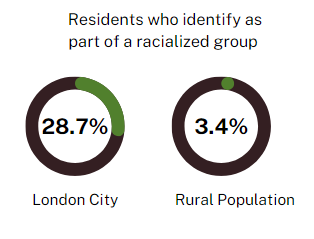
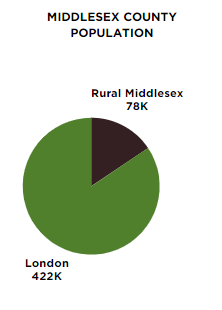
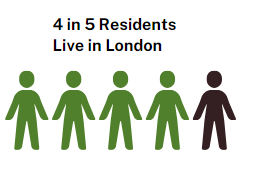
An overview of the findings from demographic, economic, agricultural and environmental indicators in Middlesex County, including London City, eight municipalities, and First Nations communities.
- Residents of Middlesex County, especially in London, face challenges like unemployment and low income.
- With rising food prices and a growing and aging population, there might be an increased need for food assistance.
- Middlesex has some of the richest agricultural cropland in Southwestern Ontario. Agriculture is a major land use in the county and significantly contributes to the local economy and culture.
- The challenge is to manage population growth while protecting agricultural lands and the natural environment.
Stakeholder Insights
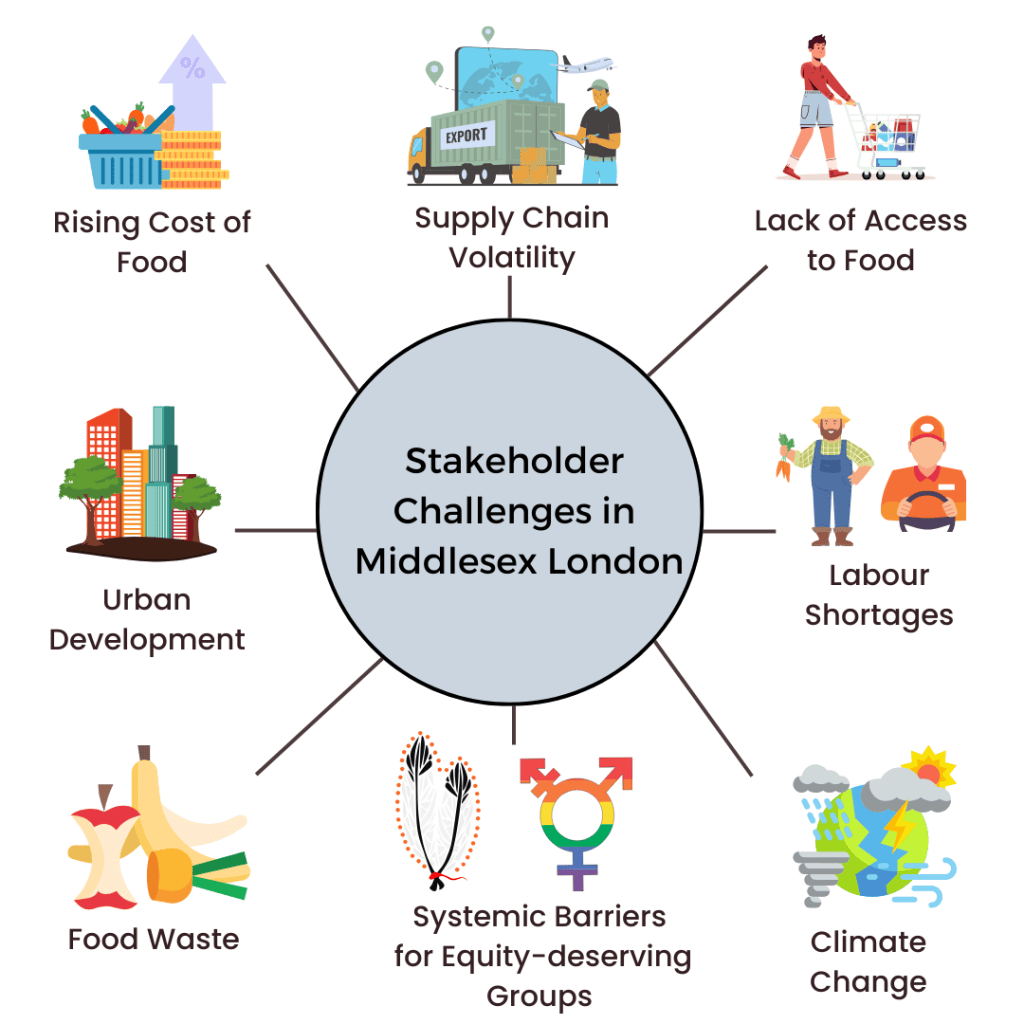
Interviews with key community stakeholders led the following eight key challenges to be identified. Click the tabs below to learn more about each stakeholder challenge:
Stakeholders identified that across Canada, the cost of basic food staples such as fresh fruit, vegetables and meat has risen on average 9.7% between April 2021 and April 2022 impacting food security for individuals and families and increasing the demand for food from food system stakeholders.
Examples of this Challenge: |
|
Many factors affect access to food. Neighbourhoods may have limited grocery stores or other food retailers. The cost of gas and public transit routes present challenges for travelling to locations with more affordable groceries. Access to food and food banks in rural communities is especially difficult for those without public transportation.
Examples of this Challenge: |
|
Stakeholders identified that across Canada, the cost of basic food staples such as fresh fruit, vegetables and meat has risen on average 9.7% between April 2021 and April 2022 impacting food security for individuals and families and increasing the demand for food from food system stakeholders.
Examples of this Challenge: |
|
Climate change will impact agriculture in the near future and the public is at a crossroads with the reality of climate impact from meat-eating and other popular components of plant-based eating. Current legislation doesn’t support hunted meats.
In April 2022, the City of London released its Climate Emergency Action Plan with an aim to achieve net zero greenhouse gas emissions by 2050. Food waste avoidance plays an important role in this plan.
Supply chain disruptions of key ingredients, due to COVID-19 and the war in Ukraine, highlight the volatility of the supply chain. This underscores the importance of purchasing from local food producers to ensure a consistent, cost-effective, and low-waste food supply. Additional concerns include the affordability of agricultural inputs, maintaining arable land, and insufficient funding support for companies.
Middlesex London has some of the best farmland in the world! Farmers are primary producers and stewards of the land, holding onto it for future generations. However, with growing populations, urban areas are expanding, reducing available farmland with farmers having to grow more food on less land. There is a desire to protect farms and restrict development on farmlands to stop urban sprawl.
Lack of talent and labour force is an ongoing challenge for food systems, from farms to processing and transportation. Increased immigration into Canada may help address this challenge. In Middlesex County, the average age of a farm operator is 57 years. Almost 40% of the agricultural workforce in Canada will retire in the next decade, and one in three agriculture jobs will go unfilled by 2029, with Ontario accounting for the majority of the country’s agricultural labour gap. Succession planning and recruitment to agriculture jobs are important.
Systemic barriers exist for members of the 2SLGBTQIA+ community, BIPOC community, people living in low income, persons with disabilities, and Indigenous peoples. Members of these groups often struggle to find adequate funding to support their programs.
Examples of this Challenge: |
|
Stakeholder Recommendations

Community Insights
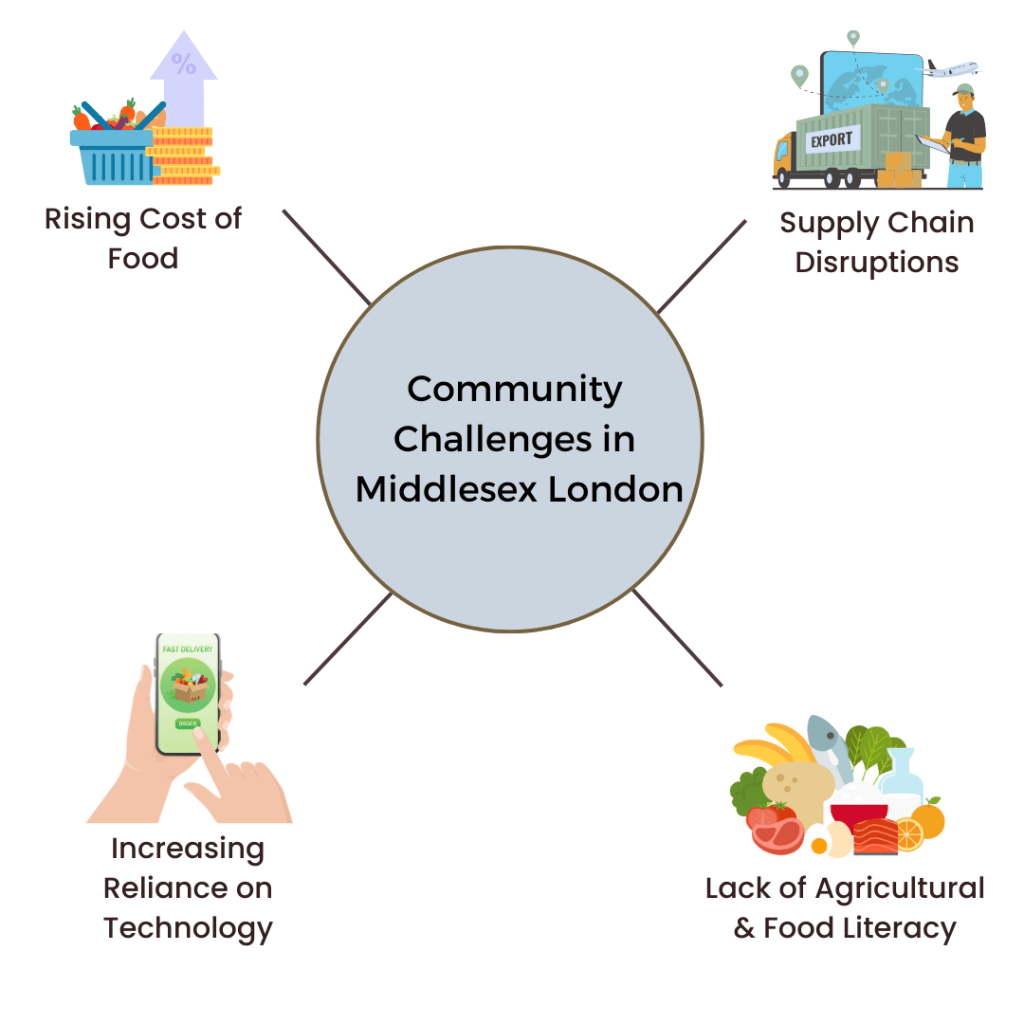
Interviews with community members led to the identification of four key challenges. Click the tabs below to learn more about each community challenge:
The rising cost of buying and growing food was a common challenge for all attendees, including individuals, families, and seniors. They felt their food budgets had less purchasing power post-pandemic, and those who could increase their budgets did so reluctantly due to declining food quality. Increased costs in other areas also affected their ability to spend more on groceries. Seniors on fixed incomes had to make sacrifices to stay within budget. Additionally, those with dietary restrictions faced higher food costs due to the expense of special food items.
Examples of This Challenge |
|
Participants highlighted a lack of knowledge about the local food system and how to access and cook locally-produced food, a concern shared by both rural and urban communities. They noted that younger generations lacked agricultural and food literacy, which was not adequately covered in school curriculums. Many suggested that people were unaware of the value, availability, and preparation of local food.
Examples of This Challenge |
|
Participants frequently mentioned supply chain disruptions, such as empty grocery store shelves and reduced food availability. They expressed increased concern about supply chains post-pandemic, noting difficulties in finding preferred products, which sold out quickly and more often. When available, many observed a decline in quality, especially in produce, and noticed that items were closer to their expiration dates, leading to more food waste.
Examples of This Challenge |
|
Participants discussed the growing role of technology in grocery shopping and food preparation, noting increased use of loyalty programs, online ordering, and mobile apps during the pandemic. Older adults found this reliance on technology challenging due to limited access and know-how, preferring traditional methods like paper flyers, which were inconsistently delivered during the pandemic. All age groups agreed that relying on technology for deals and discounts can be a barrier for some people.
Examples of This Challenge |
|
Five of the United Nations Sustainable Development Goals (SDGs) were identified as conversation prompts for the session:


What's Working Well
Food is functional, emotional, and social depending on the context, and people enjoy connecting with others and the land through food. Addressing food security issues related to the pandemic should also consider that people may seek out food programming for reasons other than food security, including reducing isolation and learning complementary skills. A holistic approach that considers diversity within the community is recommended. Click each tab to learn more about what is working well:
Participants highly praised community programming related to agriculture and food, particularly for children and youth. Programs like educational camp for children and career opportunities in agri-food for adolescents were seen as valuable for teaching about food and cooking. Community programming was identified as a way to teach people about food and cooking who may not have the opportunity to learn elsewhere. These programs also benefited mental health by fostering connections, sharing knowledge and resources, and educating about food origins. Participants wanted more such programs in their communities.
Examples of How This is Working Well:
- Little Sprouts program in Granton: Teaches children how to grow and cook food.
- Harvest Bucks offered by the Middlesex London Health Unit: Encourages local food purchasing.
- Community cooking programs: Provide opportunities to cook a meal or learn a skill, such as canning.
Many participants stated they felt they had strong meal planning and preparation skills, such as shopping within a budget, batch cooking and freezing, and price comparison. However, they noted that these skills were not common among their peer group. Some mentioned repeatedly buying the same food items and batch cooking to stay within their budget or shopping at multiple stores to access more deals. They felt that skills-based programming, such as how to use rewards programs or shopping apps, could be useful for others to understand how to shop more efficiently. However, they emphasized that these strategies were not actual solutions to the problem of food insecurity but rather coping mechanisms they had adapted to address many of the challenges identified above.
Examples of How This is Working Well:
- Freezing sale items: To use in the future when they are no longer on sale.
- Price comparison: Online or in an app to stay within budget.
- Shopping at stores that offer ‘price matching’: To competitor flyers.
- Collecting loyalty rewards and cash back: Through bank and in-store programs.
Local food delivery boxes were discussed as a positive way of supporting local agriculture and the food system, especially for people who may not be as engaged in shopping for local food. Produce boxes (rather than meal kits or specialty boxes) were the most commonly discussed, including Community Supported Agriculture (CSA) boxes from local farms and boxes specifically aimed at reducing food waste. Participants shared that they felt inspired to try new recipes with ingredients they otherwise would not have considered purchasing. They also felt the quality and quantity of produce were significantly better than most food from grocery stores. However, some participants living in apartment buildings stated they did not feel comfortable with or were not able to access some food box delivery programs, which was a barrier.
Examples of How This is Working Well:
- London Good Food Box and similar programs: Make fresh food accessible in many communities.
- Community Supported Agriculture (CSA) boxes: Help connect local farmers to surrounding communities.
- Food Fund boxes: Offer ‘imperfect produce’ to reduce food waste.
Calls to Action
Three immediate calls to action for MLFPC are strongly recommended by the stakeholders:
- Grow and strengthen the Middlesex London Food Policy Council. MLFPC is positioned to grow and become a stronger advocate for driving food systems change.
- Act as a resource hub. MLFPC can be a communications, networking and partnerships hub to support access to information and resources.
- Advocate for clear policies and procedures. MLFPC can help advocate for improved urban agriculture by-laws and meat inspection laws to increase access to hunted traditional foods.