

This January, the Middlesex London Food Policy Council focused on Food and Mental Health. To explore this important connection, we spoke with Christina Seely, a registered dietitian with over 20 years of experience supporting individuals with mental health concerns. In this interview, Christina shares valuable insights on the relationship between food and mental well-being, the challenges faced by those experiencing food insecurity, and how we can foster better support through food and policy. The following is a transcript of the interview.

Question 1: Can you tell us a bit about yourself?
My name is Christina Seely. I have been a dietitian for 20 years. I worked at Parkwood Mental Health Care as an inpatient dietitian for 15 years until 2022. I have been a dietitian at London InterCommunity Health Centre for the past three years, with a focus on diabetes education. I am a co-chair for the Dietitians of Canada Addictions, Mental Health, and Eating Disorders Network. I have really enjoyed working with clients in both roles.
Working in mental health care inspired a strong desire to try to help support the well-being of people living with mental health concerns. Mental health conditions can be quite challenging to live with and try to manage, and people often still face stigma or discrimination.
In the past few decades, evidence on the importance of nutrition for brain health has significantly increased. I’ve had the opportunity to do presentations for other health professionals. I have seen many examples of the cyclical relationship between mental health and nutrition.
Dietitians have a role in promoting the role of nutrition in mental health, not just physical health. Also, there is a role to advocate for systemic issues, such as addressing higher rates of food insecurity in people living with disabilities.
Question 2: What trends are you seeing regarding food, nutrition, and mental health
Some of the trending topics in mental health and nutrition research are gut-brain health, the role of specific nutritents in brain health such as vitamin D and omega-3, and how nutrition may be able to reduce the risk of some types of mental health conditions such as depression or dementia. One of my favourite book authors on these topics is Dr. Drew Ramsey who is a psychiatrist with nutrition specialization.
The biggest trend is the barrier from inflation and rising food costs. It is proven that the number one determinant of physical health and diet quality is finances. Of all types of disabilities, people who have serious mental illnesses face the most significant barriers in their ability to obtain and sustain employment. They are four times as likely to receive social assistance as individuals without a disability. ODSP rates are about 30% below the Canadian poverty line.
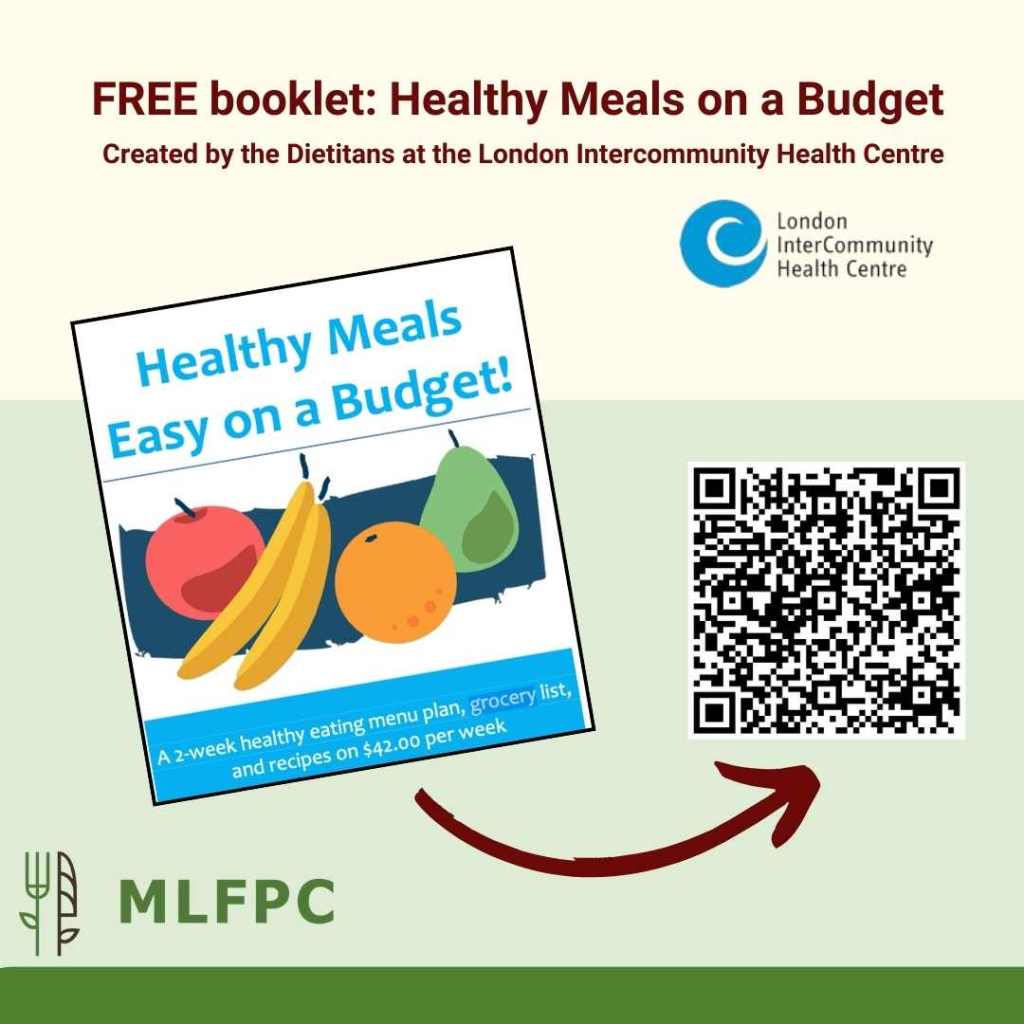
Food bank use is up 90% from 5 years ago, it has never been higher. As dietitians we are hearing people having to make a lot of difficult decisions with their budget. A lot of people are shopping at dollar stores, price matching, using apps such as Too Good to Go and FlashFood. London InterCommunity Health Centre dietitians made a client handout that summarizes these types of options.
There is an emotional toll of managing food insecurity. Not knowing if you will have enough to eat can be exhausting. People can feel resigned to being unable to afford a higher quality diet.
Question 3: What is the role of diet in mental health and brain function?
There is a cyclical relationship – what we eat supports the function and health of the brain, and mental health symptoms can significantly impact how people eat. The brain uses 20% of nutrition. The way we eat can impact our mood, focus, and energy level. Nutrition helps the brain manage stress.
Nutrition affects the brain throughout the life cycle. This is well known for babies and children, but nutrition also remains an essential component of adult brain health.
Studies show that diet can reduce risk of depression up to 40%, and that one third of Alzheimer’s diagnoses can be prevented through lifestyle choices. Medication alone does not adequately control symptoms for all people living with mental illness and diet is one tool in the toolbox. The MIND diet is one pattern of eating, a collection of foods that help support brain health for function, protection, and repair such as fruit, vegetables, seafood, dark leafy greens, whole grains and nuts. Bright or deeply coloured plant foods are nature’s signal that these foods are healthy for us. That being said, a wide range of eating habits can support health, there is no one size fits all.
A top recommendation is to eat fish at least twice a week, especially those that are high in omega-3 fats. The only significant source of the most beneficial type of omega-3 fat DHA is oily fish, such as salmon, mackerel, herring, trout, and sardines. Omega-3 fats are essential for the brain and can only be obtained through diet. They build brain cell membranes, reduce inflammation, and promote new brain cell formation. Countries that have the highest intake of fish have the lowest rates of depression. Omega-3 fat can improve mood and memory and reduce the occurrence of brain disorders from depression to dementia. Lower cost options include canned or frozen fish and omega-3 fortified foods such as eggs.
Question 4: How does mental health impact eating well?
Mental illness can also lead to food insecurity through possible symptoms such as lack of energy, low motivation, and impairment in thought processes, concentration and decision-making. Even doing grocery shopping can be difficult without good mental health.
The way we eat is impacted by many factors. People living with serious mental illness can have symptoms such as lack of energy, low motivation, and impairment in concentration and decision making. The eating process includes many steps planning meals, grocery shopping, cooking and cleaning and this can feel overwhelming. They can lead to decreased or increased appetite, skipping meals, or needing to rely on convenience foods due to low energy and motivation
It is common when people are under stress or their mood is low to crave favourite foods, although some people under stress may have a reduced appetite particularly with depression. Mental health medications can sometimes increase appetite or thirst.
It is important for people to hear that it is okay to be flexible with eating and to do what you can, when you can. People can feel a lot of pressure to eat in a certain way, but there are many ways you can eat to support your health.
Question 5: How can we support mental health through nutrition and food?
People often minimize the impact that skipping meals, eating irregularly, eating out frequently, eating few fresh foods, having a lot of caffeine, eating on the go etc has on their overall health. Some workplaces seem to encourage people to work through their lunch and breaks. This can backfire as fueling the body and brain with regular healthy meals with a couple of food groups is one of the most important ways people can support their physical and mental health and enhance productivity. Even eating breakfast regularly is helpful for mood, concentration, and ability to retain information. Regular meals provide protein and carbohydrate, both of which are important for the production and use of feel good hormones such as serotonin.
If people eat ultra-processed foods and higher sugar foods frequently, it can lead to energy crashes and can impact health over time.
Creating consistent eating routines, even starting with small changes like preparing simple meals in advance, can help individuals struggling with mental health challenges regain some control and balance.
Accessing community resources like food co-ops, urban gardens, or shared kitchens can provide support while reducing isolation and fostering a sense of community.
Creating consistent eating routines, even starting with small changes like preparing simple meals in advance, keeping ready made items on hand, can help individuals struggling with mental health, consider ready made options such as Meals on Wheels can be helpful. Lower costs foods such as frozen produce, eggs, beans, canned fish, brown bread, peanut butter can be helpful.