
By: Siobhan Watters
In 2016, Western University released its first ever Indigenous Strategic Plan. Six years later, the university announced the opening of Wampum Learning Lodge in fulfillment of the Plan’s call for an Indigenous learning space on campus. Members of MLFPC were invited to tour the Lodge and surrounding medicine garden this summer. As we shared in last week’s article, food is medicine for many Indigenous cultures in North America and is an important part of any project supporting Truth and Reconciliation. Today, we share some of the work being done at Wampum Learning Lodge to revitalize Indigenous medicinal knowledge and agriculture.

Local farmer Laura Ramirez-Sanchez (Taíno Métis) and the space’s director, Paula Cornelius-Hedgepeth (Oneida), worked together to design the medicine garden at Wampum Learning Lodge. Indigenous wisdom is woven into the very design of the site, which includes no fencing to separate humans and local wildlife from the food and medicine plants that Ramirez-Sanchez refers to as relatives. Indigenous students and visitors are encouraged to respectfully engage with their surroundings—just to be in the garden and near sacred plants is considered an act of healing. The garden, sited on a gully, is also naturally irrigated. Perhaps this means that some plants do not flourish as reliably as they would on irrigated land, but it also welcomes a far more attentive relationship to the plants and soil in the garden.
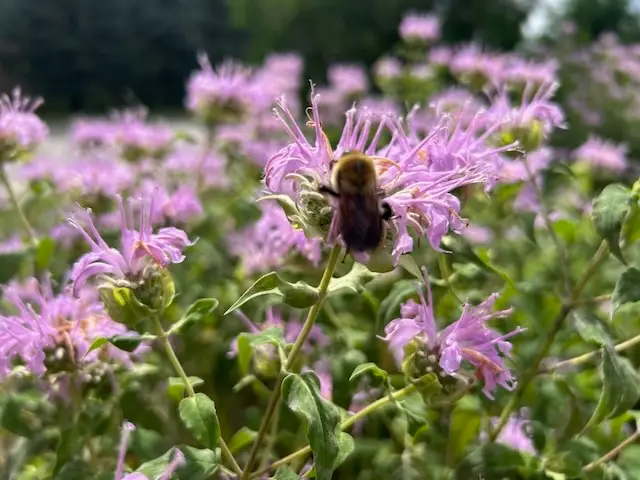
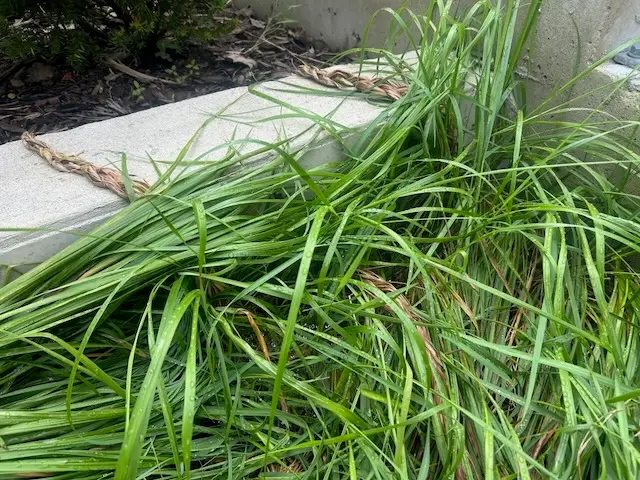
Ramirez-Sanchez introduced us to a few of her relatives. The garden includes horsetail, a plant often characterized as a weed but which has known medicinal qualities and is used by Indigenous peoples across North America in the form of tea. Bee balm (or wild bergamot) flourishes in the garden, a welcoming plant for pollinators and an edible herb that some compare to mint or thyme. Sacred plants are located near the center of the garden. A curved walkway creates a border for the swaying green-gold leaves of sweetgrass. This sacred plant is said to symbolize the hair of Mother Earth and is used in ceremony to dispel negative energy, as well as for a fragrant tea. The act of braiding sweetgrass is said to bring together the body, mind, and spirit. As an advocate for the plants themselves, as beings deserving of respect and care, Ramirez-Sanchez asks that visitors approach plants like sweetgrass mindfully and with positive energy.
On the border overlooking the Lodge’s sunken firepit is another storied and sacred plant, strawberries, which Ramirez-Sanchez said had a bumper crop this year. Strawberries are called ‘heart berry’ in the Anishinaabe language and play a central role in local Indigenous creation stories, as gifts from Skywoman. In her account of this powerful story, renowned botanist and author Robin Wall Kimmerer (Potawatomi) even says she “was raised by strawberries,” that they provided her a “sense of the world, [and her] place in it.” Nestled in the grounds of an academic institution, the garden is indeed an exercise in land-based learning, where plants do as much teaching as people.
The reach of Wampum Learning Lodge goes far beyond Western University, as seeds harvested from the garden are shared out to other organizations seeking to create similar spaces. Ramirez-Sanchez only asks that these seeds be planted with intention and active care, not as mere symbols of Truth and Reconciliation. Such gardens must be maintained and respected, so that strawberry and sweetgrass may continue to teach and provide medicine for generations to come. On our tour of the garden, our guides also offered us seeds from the garden, a clear sign of the Lodge’s mission to share Indigenous knowledge and gifts with the broader community.
We are very grateful to the team at Wampum Learning Lodge for sharing their space and knowledge with us!
Pingback: From Access to Autonomy: Putting Indigenous Food Sovereignty in Focus – Middlesex London Food Policy Council