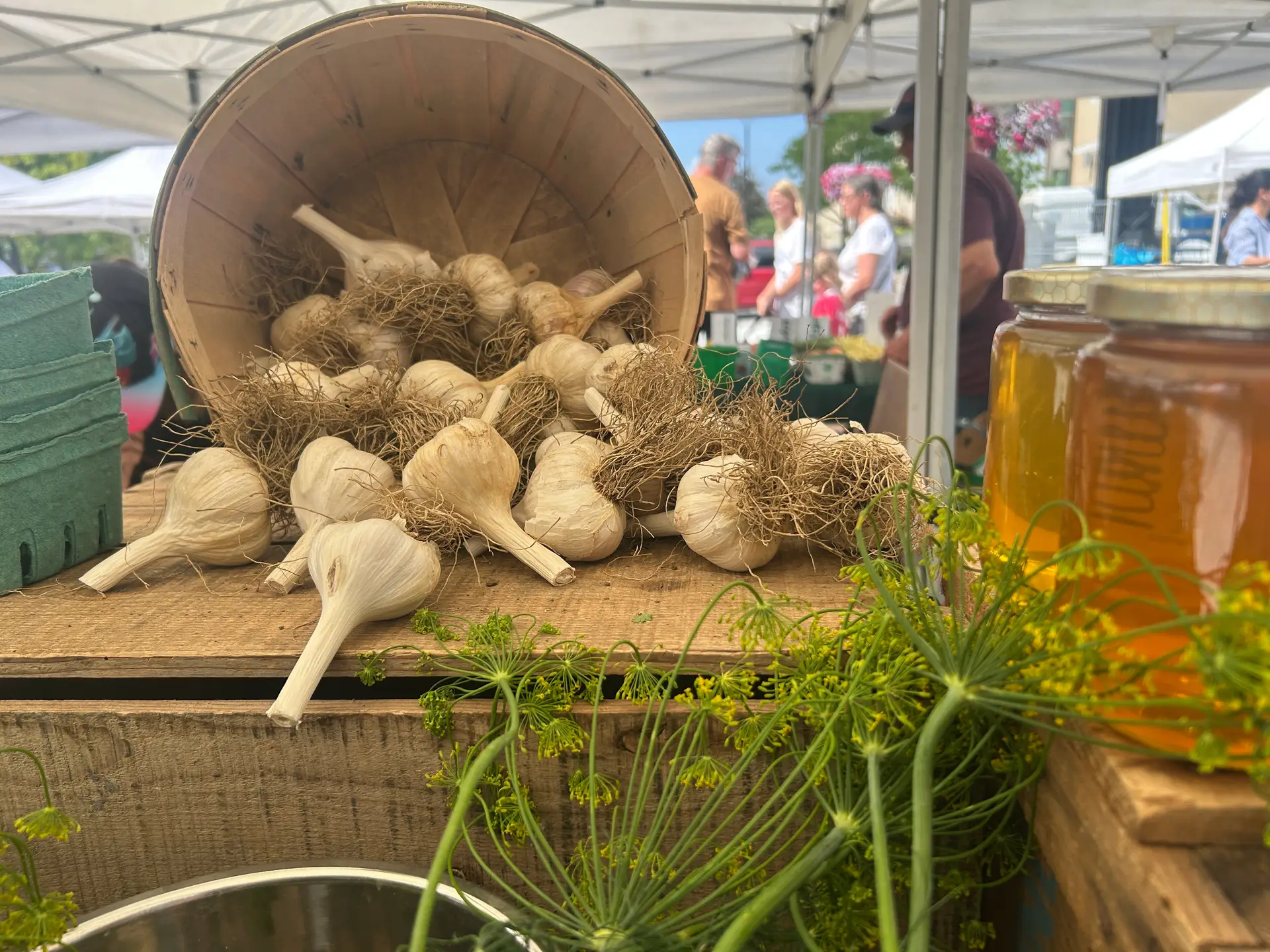

Ontario is known for its incredibly productive farmland. Ontarians divide the summer by fruit and vegetable seasons, eagerly awaiting when they can visit their local U-PICK and stock up on blueberries and strawberries, and in later months, apples, rhubarb, and pumpkins. Country roads littered with farm stands, offering the best sweet corn available and stone fruit without rival. Ontarians are aware of the agricultural blessings this province has to offer, but farming isn’t a cheap or easy endeavour.In 2021 Ontario had over 48,000 farms that spanned over 11.8 million acres, but this is a decrease in both the number of farms and the amount of land dedicated to farming since the 2016 Canadian Agricultural Census (Chen, 2022). How is farming changing in Ontario?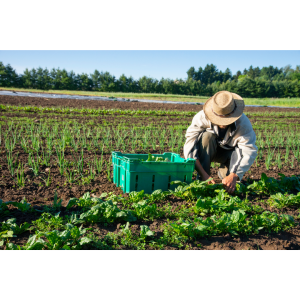
The cost of living has remained a point of anxiety for many, and grocery bills have been a significant contributor to this, with Canadians spending 5.9% more on food in 2023 (Evans, 2023).

Consumers are not the only ones struggling to keep up with bills, farmers have their own expenses that are on the rise, fertilizers and fuels being among the largest culprits. Conflict between Russia and Ukraine, two significant producers and exporters of fertilizers is contributing to the over 80% spike in fertilizer costs (Dawson, 2022; Statistics Canada, 2022). Fuel, also affected by the conflict, was not much better, increasing by more than 78.5% compared to the previous year (Statistics Canada, 2022).
Inputs are a significant part of farming costs, and most farmers rely on these inputs to produce the yield needed to sustain their business and feed the population. In 2008, 4.9 million kg of pesticides were used on Ontario crops (OMAFRA, 2022), and in 2021, 63% of fruit, berry, vegetable, and nut farmers used fertilizer (Statistics Canada, 2022).
That’s not all! The cost of farming equipment increased by over 20%, and livestock feed by over 29% (Statistics Canada, 2022). This isn’t to say that rising farming expenses are a direct cause and effect scenario for rising food costs. Most farms only see about 20% of grocery sticker prices (Dawson, 2022).
Farming is a touchy pursuit, often at the mercy of mother nature, and with changing climates, a precarious economy, and introductions of new pests, something needs to be done. Thankfully, there are methods of sustainable farming that can help mitigate the plethora of challenges facing farmers.
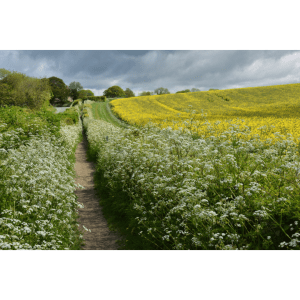
One of my personal favourite sustainable farming practices is the implementation of hedgerows, tree breaks, or patches of natural space within and between farmland. Hedgerows benefit a multitude of farming aspects, such as protecting soil from erosion caused by wind, moisture retention, carbon sequestering, increasing biodiversity, and providing habitat to beneficial species to name a few (Marshall-Chalmers, 2023; Thiel, Terpsma, Krzic, and Smukler, n.d.).
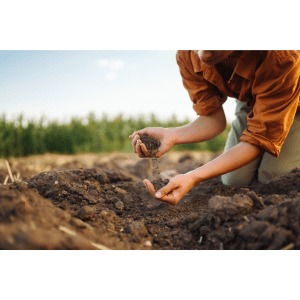
Other methods such as crop rotation, cover crops, and no-till farming are practices that help retain soil quality and fertility, conserve moisture, and organic material in soil, as well as protect against soil erosion (Creech, 2017; Wilson, 2021).
With the price of food increasing and the climate becoming less agreeable for food production, including other challenges facing farmers we need to think about how we use and waste food. The true price of food comes down to the farming methods prominent in our province, the way they affect the environment and how they connect to the global economy and ecosystem.
Written by Lauren Palmer
References:
Appendix IV. quantities of specific pesticide active ingredients used on all vegetables in Ontario, 2008. ontario.ca. (n.d.-a). https://www.ontario.ca/page/appendix-iv-quantities- specific-pesticide-active-ingredients-used-all-vegetables-ontario-2008
Canada, S. (2022, December 15). Farm Management Survey, 2021. The Daily. https://www150.statcan.gc.ca/n1/en/daily-quotidien/221215/dq221215b-eng.pdf?st=iJbIlISC
Chen, Z. J. (2022, June 15). Ontario is an agricultural powerhouse that leads in many farming categories. Canadian Agriculture at a Glance. https://www150.statcan.gc.ca/n1/pub/96-325-x/2021001/article/00006-eng.htm
Creech, E. (2017, November 30). Saving money, time and soil: The Economics of No-till farming. USDA. https://www.usda.gov/media/blog/2017/11/30/saving-money-time-and-soil-economics-no-till-farming
Dawson, T. (2022, June 15). High fuel costs, demand for fertilizer driving up costs for Canadian Farmers. National Post-News-Canada. https://nationalpost.com/news/canada/high-fuel-costs-demand-for-fertilizer-driving-up-costs-for-canadian-farmers
Economics information: 2008 survey of pesticide use in Ontario. ontario.ca. (n.d.-b). https://www.ontario.ca/page/economics-information-2008-survey-pesticide-use-ontario#section-6
Evans, P. (2023, December 8). Expect some food prices to get cheaper next year – but typical grocery bills may still go up by $700. CBCnews. https://www.cbc.ca/news/business/canada-grocery-bill-food-price-inflation-2024-1.7050438
Government of Canada, S. C. (2022a, November 29). Growing and raising costs for farmers. https://www.statcan.gc.ca/o1/en/plus/2413-growing-and-raising-costs-farmers
Government of Canada, S. C. (2022b, December 15). Farm Management Survey, 2021. The Daily. https://www150.statcan.gc.ca/n1/daily-quotidien/221215/dq221215b-eng.htm
Marshall-Chalmers, A. (2023, February 15). The edges matter: Hedgerows are bringing life back to farms. Civil Eats. https://civileats.com/2023/02/14/the-edges-matter-hedgerows-are-bringing-life-back-farms/
Thiel, B., Terpsma, C., Krzic, M., & Smukler, S. M. (n.d.). Farmland Hedgerows; Hedgerow Benefits & the Delta, BC Hedgerow Project. https://lfs-sal.sites.olt.ubc.ca/files/2013/01/Brief1-FINAL.pdf
Wilson, A. (2021, October 20). What is sustainable agriculture?. ECO Canada. https://eco.ca/blog/what-is-sustainable-agriculture/



This article did not discuss the initial cost of farm land which in most of the richest growing area, southwestern Ontario, is between $20,000 and $45,000 an acre. There are government programs in place to assist but these do little to reduce this cost with the average size farm in Ontario being 250 acres
This article is clear at helping non farmers understand the on farm costs needed to grow food.