
From Plate to Planet: Amy Ford’s Role in Local Food Transformation

Written by Aida Zhang and edited by Matthew Kang

Green banner with the Middlesex London Food Policy Council logo on the left, text reads: “2025 Food Champion. Congrats! Amy Ford, Director, Planetary Health, Nourish.” Background shows string lights against blurred greenery.

At the heart of London-Middlesex’s local food movement is Amy Ford, a true Food Champion whose passion and expertise are driving our region toward a more sustainable and equitable food future.

As Director of Planetary Health at Nourish, a national non-profit transforming food in healthcare, Amy brings intention and energy to every project. Her work focuses on aligning values, removing roadblocks, and helping mission-driven groups take bold steps toward improved planetary health. With over a decade of leadership in sustainable inpatient food services, she understands what it takes for teams to achieve meaningful change — from local procurement and waste reduction to culturally mindful, low-carbon menus.

Graduating from Western University with a degree in Food and Nutritional Science and holding an MBA, Amy has spent her career at the intersection of food and health. She believes food is far more than a basic need – it’s a powerful force that connects communities, preserves culture, and protects the environment. With strong foundations in both nutrition and strategic leadership, Amy is deeply committed to improving the health of both the planet and its people.

Amy supports local and national healthcare organizations by developing practical tools that promote greener food procurement and systemic change. With a deep understanding of the complexities of local food systems, she excels at building bridges and uniting diverse groups to create healthier, more resilient food networks.

Amy also contributes her expertise to several key committees, including the Environmental Action and Stewardship Committee, the PEACH Healthy Food Committee, and the EAT-Lancet Health Professionals Community. As Chair of the Board of Urban Roots,she champions urban agriculture, and her experience as co-chair of Ark Aid reflects her deep commitment to addressing food insecurity in London.

Beyond formal leadership, Amy mentors graduate students, advises on food security projects, and works with networks from the local to the international level. Her spirit of collaboration and systems thinking drives real, lasting impact.
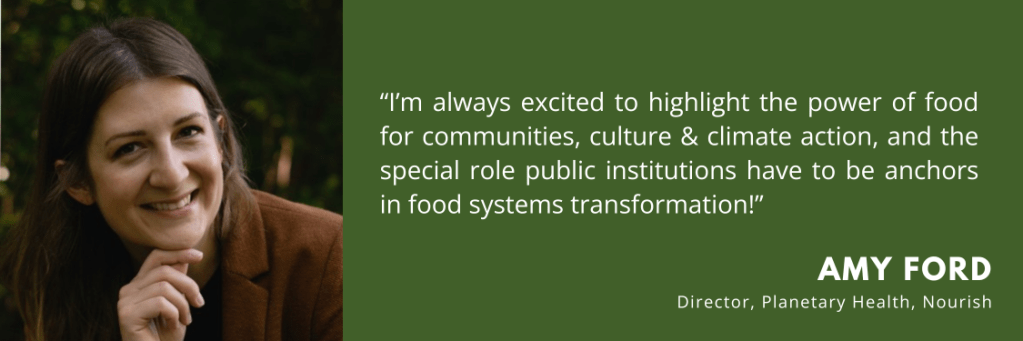
Green banner with a photo of Amy Ford smiling, resting her chin on her hand. Next to the photo is her quote: “I’m always excited to highlight the power of food for communities, culture & climate action, and the special role public institutions have to be anchors in food systems transformation!” Below, text reads: “Amy Ford, Director, Planetary Health, Nourish.”

In her personal life, Amy demonstrates her values by prioritizing local food and involving her children in gardening and food initiatives, planting seeds of hope for the next generation. She enjoys writing, volunteering, and advocating for environmental and social justice, and she values teamwork and bold, collective dreams.

In her own words:

“I’m always excited to highlight the power of food for communities, culture & climate action, and the special role public institutions have to be anchors in food systems transformation!”

Amy’s story reminds us that every choice to support local, sustainable food is a step toward a healthier and more vibrant food future for London-Middlesex. Let’s keep growing this vision together.
The London Food Coalition: Reducing Food Waste and Nourishing Communities

Written by Kathy MacKay and edited by Matthew Kang

Every day in London, food that could feed families ends up in landfills. The London Food Coalition (LFC) is working to change that. 

The London Food Coalition is made up of 27 local agencies, including ANOVA, Ark Aid Mission, Atlosha Family Health Services, Meals on Wheels London, and more. Together, they form a powerful network working to make sure good food reaches those who need it most.

From Waste to Plates

At the core of LFC’s work is a simple but impactful system: collecting high-quality surplus food from farms, suppliers, and retailers across London, then redistributing it to 27 member agencies that support meal programs, shelters, community centres, Indigenous organizations, and more.

This system not only saves good food from going to waste, but it supports the people and programs that feed Londoners every single day. In 2024 alone, LFC recovered 375,000 pounds of healthy surplus food from the waste stream, which resulted in thousands of meals and measurable environmental benefits.

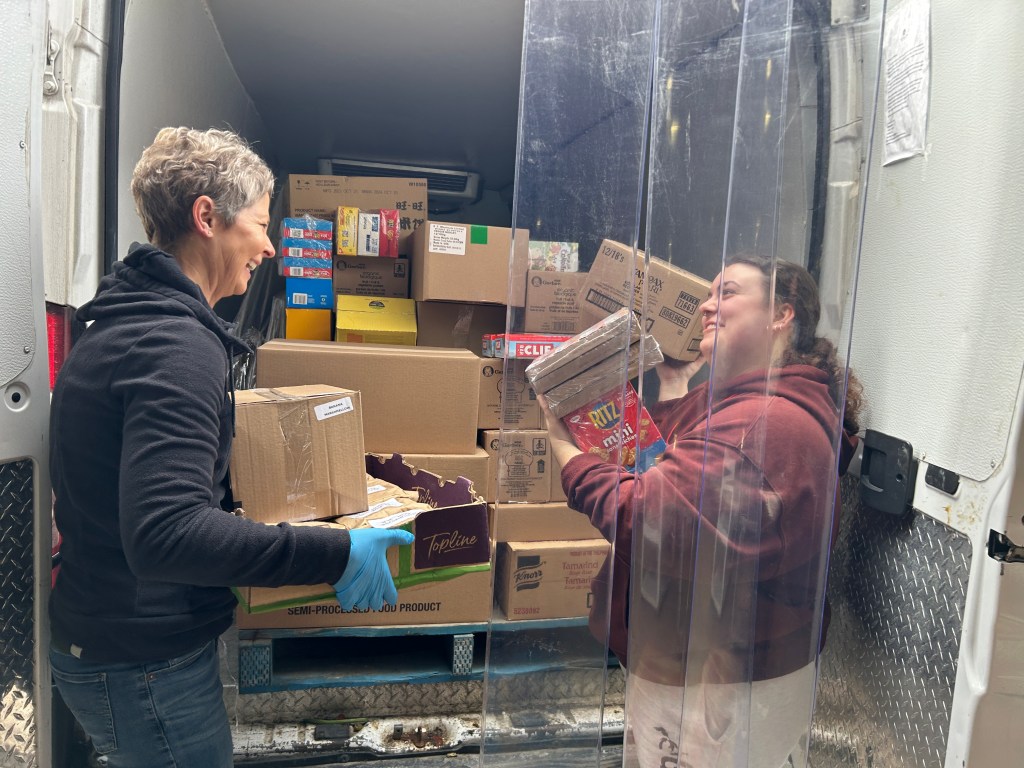
Two people are smiling while unloading boxes of food from the back of a truck. One person wearing gloves is carrying a box, while the other, in a maroon hoodie, is holding packages of crackers. The truck is filled with stacked food boxes.
Two Volunteers helping unload a pick-up of recovered food.

More Than Just Moving Food

The work of the London Food Coalition goes far beyond food logistics. At a broader level, LFC serves as a genuine example of building a better and more just food system. As the coalition states, they are proud to be part of “a national shift towards food systems that nourish, respect, and uplift.” Their efforts also help reduce greenhouse gas emissions and contribute to creating a just, ecological, and relational food system.

Visiting the LFC

I had the pleasure of visiting the London Food Coalition twice in the spring of 2025, and both visits left me with a strong sense of community and dedication. Quentin Ball, the Food Hub Coordinator, was impressive to watch as he actively unloaded a large shipment and supported all aspects of sorting and handling food. Matt Wannan, the Manager, was equally inspiring, providing hands-on assistance to volunteers in the food area and ensuring operations ran smoothly. Their leadership clearly creates a welcoming environment where everyone feels valued and connected.

The LFC is in the same building as the Glen Cairn Community Resource Centre, and I observed a close, collaborative relationship between the two organizations. While at the LFC, I also had the chance to speak with some volunteers from Glen Cairn who utilize the recovered food from the LFC. One volunteer, Carmela, who cooks with the food supplied by LFC, shared beautiful insights that capture the spirit of this work.

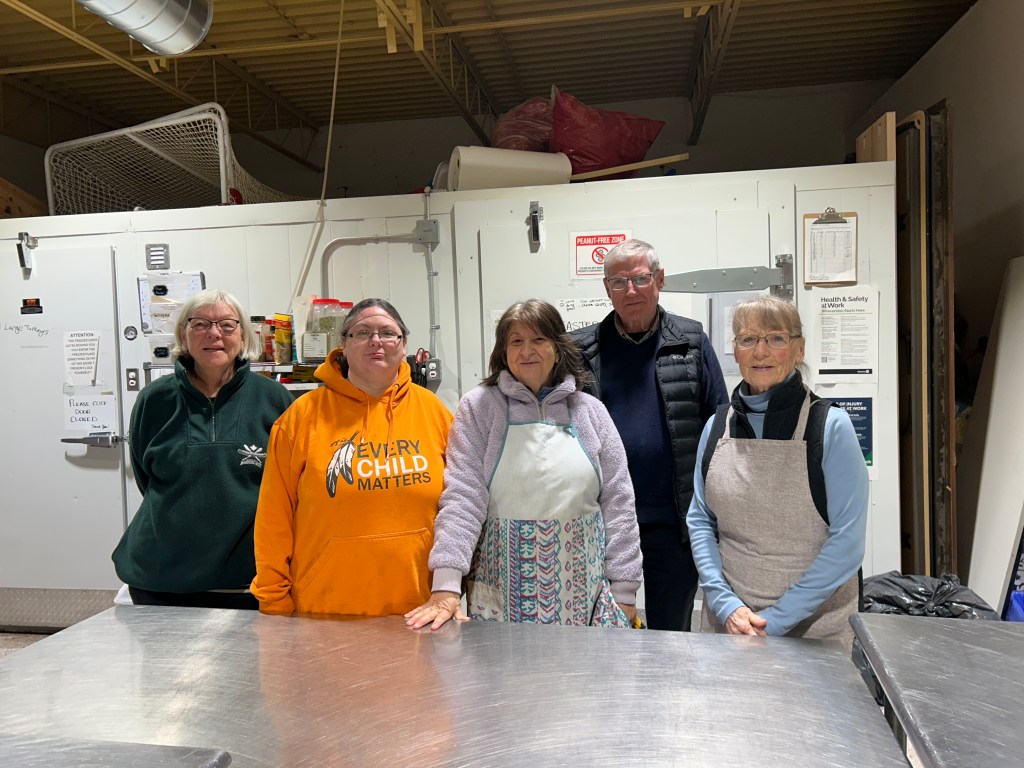
Five smiling people standing in a commercial kitchen.
Glen Cairn volunteers ready to use the food they receive from the London Food Coalition.

Voices From Community

“All of us [the volunteers] have the same food value philosophy. Nothing gets thrown in the garbage,” Carmela told me. “If we’re making broth, we’re keeping all the parts of the broth to use for other menus that might be coming up.”

She went on to say, “It definitely relates to my family value system and food. My parents are both landed immigrants from Italy. They lived off the land and nothing went in the garbage. They were composting and recycling before it was cool to do it.”

Carmela’s connection to the work goes beyond food. It’s deeply personal. “I feel like I’m giving back because I’m cooking with love to help people. And that is the philosophy they [my parents] lived on. If they had three pieces of bread, they would keep one and share two. That’s the philosophy they grew up with … helping people … and that has stemmed down to me and my siblings and their families. So it’s who we are, and doing this fulfills and satisfies my heart.”

She described the social aspect of volunteering, too: “I’ve made lots of friends. Yeah, so it’s also that, like social fun. Although we’re working hard, we’re [also] laughing.”

These voices reveal that LFC’s work is not just about moving food, it’s about people coming together over a shared mission to nourish the city with dignity, love, and community.

How to Get Involved

The London Food Coalition thrives on community support. Here’s how you can get involved:

    • Volunteer: Help sort and deliver recovered food to local agencies
    • Donate: Support storage, vehicles, and logistics that keep food moving
    • Spread the Word: Share LFC’s mission with your network

By getting involved, you help reduce food waste, support emergency food programs, and build a healthier, more connected, and sustainable London. And maybe make some new friends too!

Greenfields Therapy Farm: A Place to Breathe, Connect and Heal

By: Kathy MacKay and Edited by: Matthew Kang

Greenfields Therapy Farm is rooted in  the belief that healing happens through connection. Located on the grounds of Mazak Farms, it offers a calm, grounded environment where nature, animals, and therapy come together to support emotional well-being.

“Growing up surrounded by horses and given the ability to roam free set the groundwork for Greenfields,” says Sarah Harrison, owner and therapist, on her webpage. “The farm setting allows me to integrate the power of horses and nature into my therapy practice.”

A child wearing a riding helmet and green shirt leads a black and white horse with a purple rope, accompanied by an adult in a green t-shirt, jeans, and pink boots. They walk together in a dirt paddock surrounded by white fencing and tall trees under a partly cloudy sky.
Sarah working with one of the horses at Greenfields Therapy Farm, where hands-on care and gentle connection with animals support therapeutic growth and emotional well-being.

At Greenfields, therapy is a client-focused experience. “Each session is unique and tailored to what the client needs,” says Harrison. Activities might include grooming or walking a horse, observing the herd, interacting with other farm animals such as bunnies or chickens, or taking part in other farm routines.

Sarah believes healing happens through connection. She uses experiential techniques that involve  movement, nature, animals, and a strong client-therapist relationship. The farm welcomes clients of all ages, from children (8+) to adults, seeking support with anxiety, depression, confidence building, sensory challenges, and more. The farm offers a place to reconnect with oneself, with others, and with the natural world. 

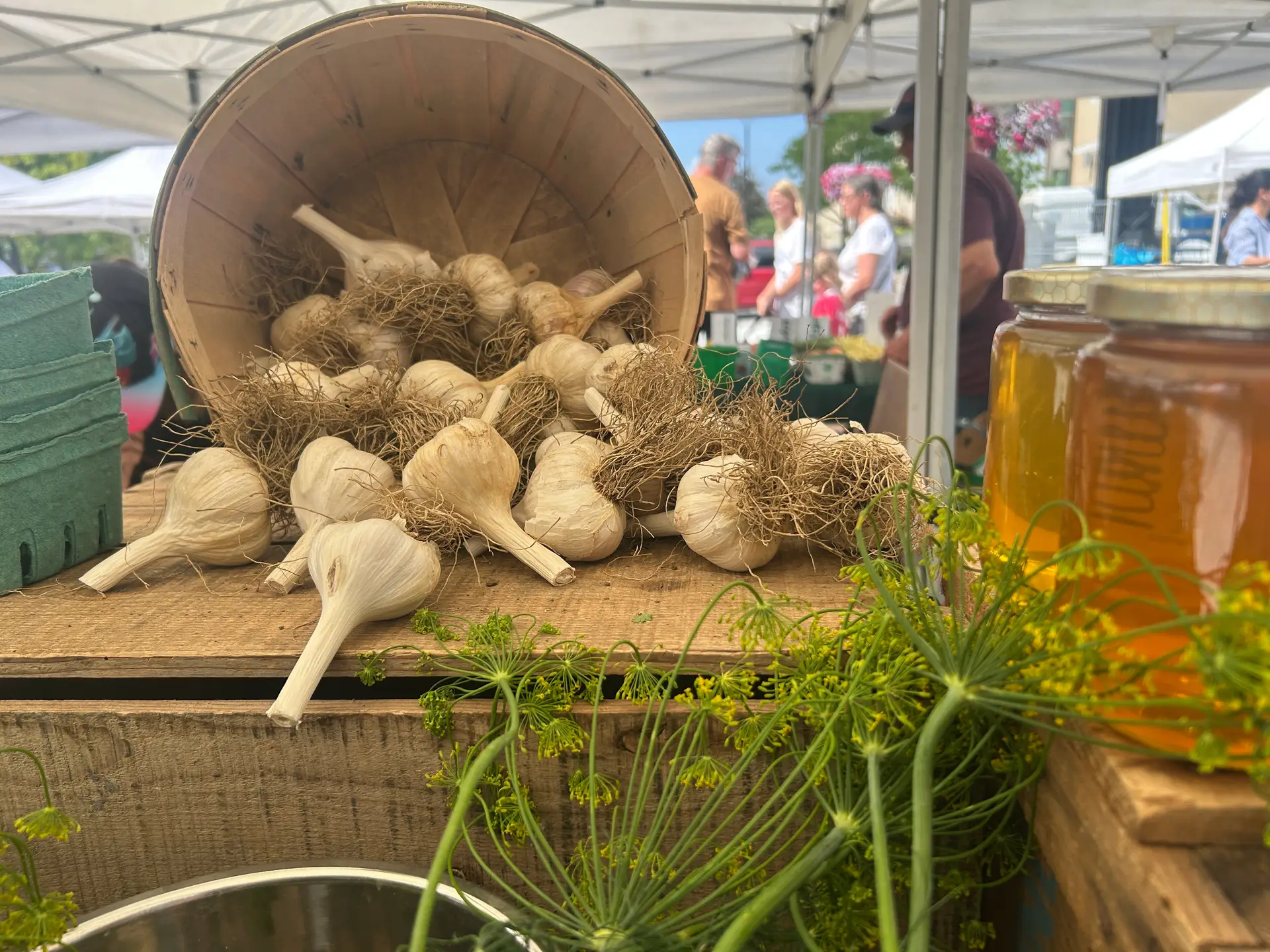
Visitors are encouraged to come and experience the farm, whether for therapy or to stop by the Mazak Farms stand, where organic garlic is now in season.

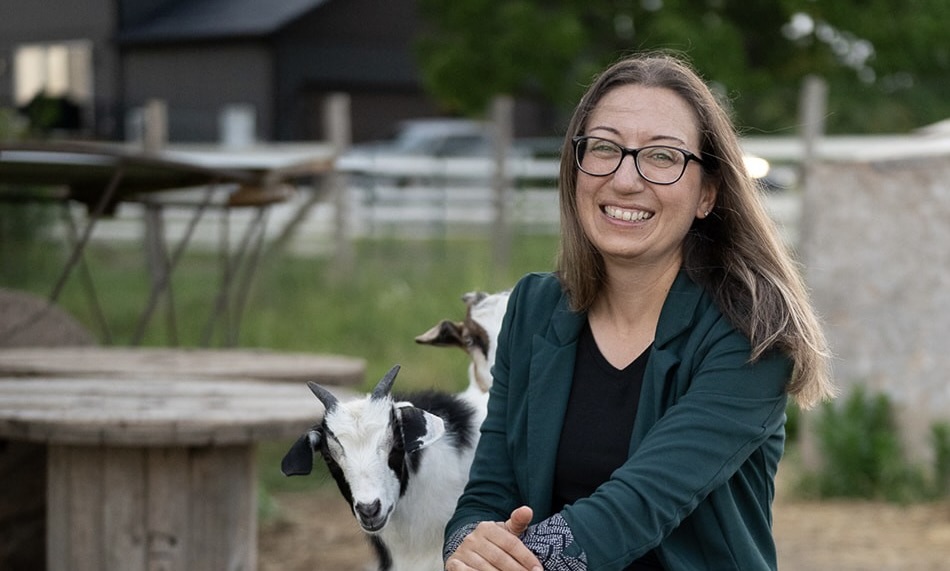
A smiling woman with long brown hair and glasses in a farm setting. She wears a green blazer, and a black shirt. Behind her, two goats are peaking out. The background is a fenced-in area with grass and trees.
Sarah Harrison, Owner and Therapist at Greenfields Therapy Farm

About Sarah Harrison, R/TRO, E.A.T., BRLS, TRec Diplm

Sarah Harrison is a Registered Therapeutic Recreation Therapist (R/TRO) with the Canadian Therapeutic Recreation Association. She holds a Bachelor of Therapeutic Recreation from Brock University and a Recreation Therapy Diploma from Niagara College. She is also a certified Equine Assisted Therapist through the Horse Therapy Centre of Canada and works as a professor and instructor in the field.

Harrison grew up on Mazak Farms, which her parents established in the 1970s. She now runs the farm with her husband and their three daughters. Mazak Farms has been certified organic since 1998 and produces asparagus, garlic, rhubarb and other seasonal vegetables. The farm remains focused on ecological sustainability and community connection, values that closely align with the therapy work practiced at Greenfields.

The Ten-Dollar Challenge: How Local Food Can Create a Billion-Dollar Impact

By: Alyssa Rush and Edited by: Matthew Kang

The local food movement matters now more than ever. 

But how can we change our spending habits to support our local communities? Have you heard of the “ten-dollar challenge, billion-dollar impact?” 

It’s a simple but powerful idea: if every family in Ontario shifted  just over $10 a week of their regular grocery budget towards local food, we could generate $2.4 billion in local economic impact each year.

This would create over 10,000 new jobs!

A busy outdoor farmers' market with produce stalls set up under white and purple canopy tents. A yellow van with a "Thames River Melons" sign is parked behind one of the stalls. The tables are filled with fresh vegetables including corn, tomatoes, green beans, potatoes, and peppers. People are browsing and buying produce.
A Farmers Market in London Middlesex. Photo Credit: Donna Currie

By making small changes in how we spend our grocery dollars, we can strengthen our local food systems and build more resilient communities.

What counts as local food?

Local food isn’t limited to one source. It can come from: 

  • Community gardens 
  • Local farms
  • Neighbourhood farm markets
  • Even your own backyard!

Eating locally also means enjoying the changing seasons, from fresh greens in spring to hearty root vegetables in the fall.

Want to get started?

One of the best ways to support local is by purchasing a CSA (Community-Supported Agriculture) box from a nearby farm.  (Check out this link to learn more about our 2024 Food Champion, Common Ground Farm and their CSA)

When you buy a CSA share, you commit to receiving part of a farm’s harvest throughout the season.

Shares often include:

    • Fresh vegetables and fruit
    • Eggs
    • Meat and poultry
    • Microgreens
    • Flowers

It’s a win-win.

Farmers gain reliable income, and you get fresh, local food delivered to your doorstep or a local pickup point.

Shifting $10 of your grocery budget  into your local food economy each week can spark real change. 

Share this challenge with your family and friends. Share it on social media. Take action. 

Support your local community and farmers. Starting with  just ten dollars.

A large wooden basket filled with fresh leafy greens, including romaine, red leaf, and green leaf lettuce, sits on a purple plaid tablecloth at an outdoor market. Jars of preserves or pickled items are arranged beside the basket.
Fresh local lettuce. Photo Credit: Donna Currie.

10 Ways to Store Food Smarter and Waste Less

By Ginette Blake, RD

Vegetables and fruit are at the top of the list of most wasted foods in Canada, according the Second Harvest.  Fresh produce is perishable but how you store it makes big difference in how long it will last. The Home Storage Guide for Fresh Fruit and Vegetables provides detailed information.

Here are some tips to help you maximize the life of your vegetables and fruit and reduce waste.

1. Wash just before eating

Wash most vegetables and fruit just before eating.  Washing makes them spoil faster.  Leafy greens can be washed ahead of time if they are dried properly.  Wrap in a clean towel or paper towel.

2. Ripen first, then refrigerate

Many fruit such as pears, peaches, plums, melons and avocados can be left at room temperature until they are ripe, and then put in the fridge. Store all cut vegetables and fruit in the fridge.

3. Beware of ethylene gas

Some fruits like apples, bananas, tomatoes, and avocados give off a gas called ethylene which speeds up the ripening and spoilage of other produce. Store most vegetables and fruit separately on the counter or in the fridge.

4. Store wilt-prone veggies properly

Store vegetables that will wilt (leafy greens, cucumbers, root vegetables, peppers) in bags in the vegetable drawer in the fridge.

5. Keep pantry staples cool and separate

Store potatoes, sweet potatoes, garlic, and onions in cool, dry, dark cupboards, not the fridge. Also, keep potatoes and onions apart from each other. Store green onions and cut onions in plastic in the fridge to avoid spoiling other foods.

6. Revive wilted produce

Many vegetables such as leafy greens, herbs, celery, cucumbers and carrots can be rehydrated in cold or ice water if they wilt.

7. Handle fresh herbs with care

Store your fresh herbs (except basil) in the fridge for best results.   Wrap in paper towel unwashed and put it in a plastic bag or store in the fridge in water like you would flowers in a vase.

8. Freeze it before it spoils

Freeze fruits and vegetables if you can’t eat them before they spoil.  This freezing guide provides detailed information about how to prepare your vegetables and fruit before freezing such as blanching instructions for vegetables..

9. Store other foods safely

  • Most prepared foods should be put in the fridge within 2 hours of preparation. 
  • Keep bread at room temperature for several days or freeze it to keep it longer. Stale or frozen (grate it!) bread can make great bread crumps.

10. Know your storage times

Check out Health Canada’s guidelines for safe fridge and freezer storage times of a variety of foods.

Your Challenge this Week

Try one of these 10 smart storage strategies to keep your food fresher for longer—whether it’s rehydrating wilted greens, storing cut fruit in the fridge, or rescuing veggies in a soup

Thank you for being part of the Waste Less, Save More Challenge!

We’ve loved seeing your efforts over the past four weeks. Let’s keep the momentum going—every little step counts toward a less wasteful food system.

9 Easy Ways to Rescue Food and Keep It Delicious

By Ellen Lakusiak

Welcome to week 3 of MLPFC’s Food Waste Challenge (April 18-24, 2025).  

We could avoid so much wasted food by knowing when food can be saved. This will also save you money.

Your challenge this week: Pick something nearing (or just past) its best before date and use it — OR try out a food rescue app!

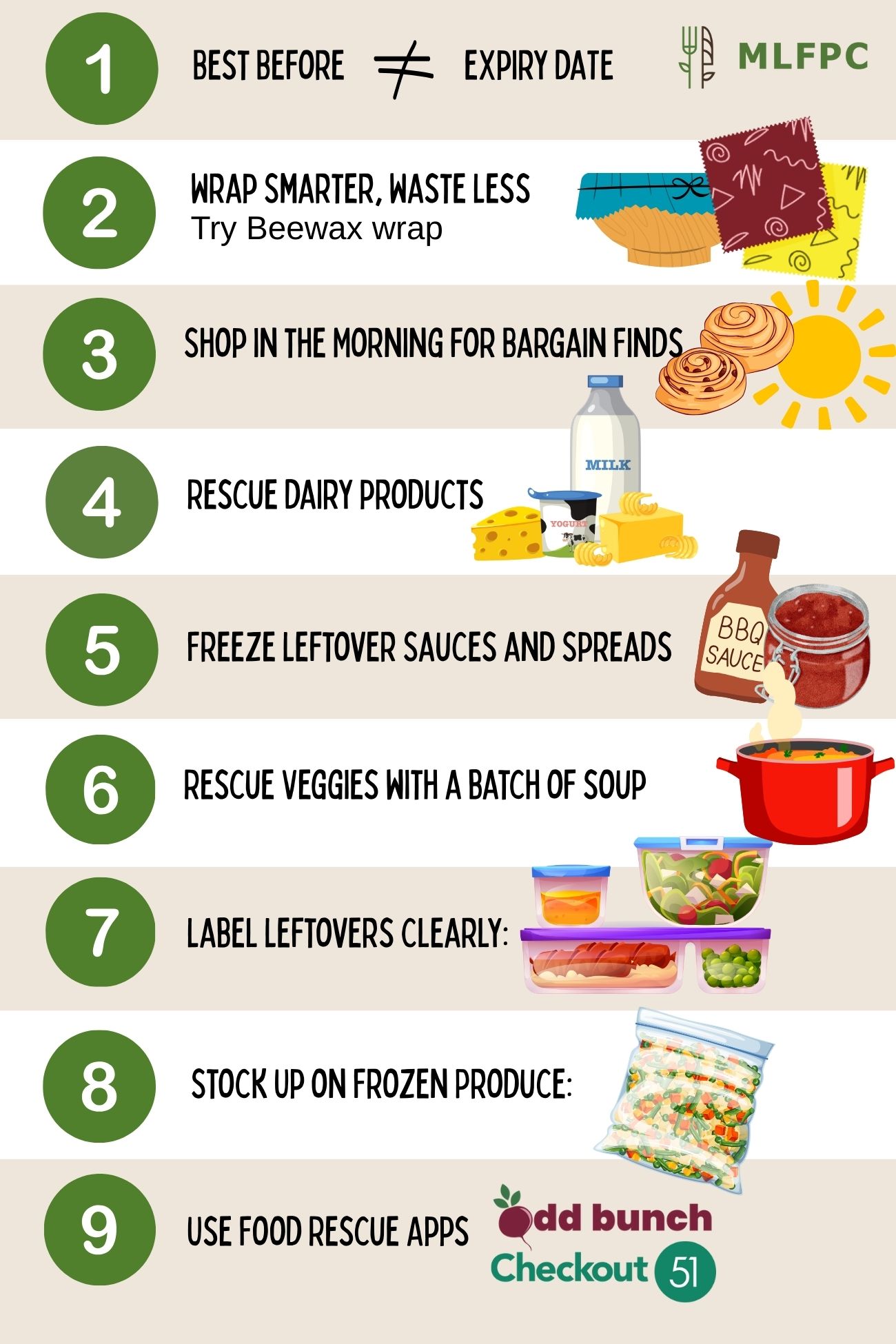
1. Know the Difference Between “Best Before” and “Expiry”

Most packaged foods have a “best before date” on the container or wrapping. This is NOT an “expiry” date. All foods with a shelf life of 90 days or less, except for fresh fruit and vegetables and certain other products, are required to have either a best before date or packaged on date, depending on where they are packaged and sold.

Best Before Dates: Tells you how long a properly stored unopened food product will keep its:

    • freshness
    • taste
    • nutritional value
    • any other qualities claimed by the manufacturer

Most foods are still edible past their best before date—just check the smell, taste, and look. Foods can be edible after the best before date has passed. Always use your senses (check smell, taste, color) to check the food quality if it is past the best before date. 

 Tip: Check out the Consumer Best Before Timetable by Second Harvest to learn more. Learn more

Expiry Dates 

    • Only five types of foods should not be consumed past the expiry date: infant formula, meal replacements, formulated liquid diets (medical), very low-energy foods (medical), and nutritional supplements
    • After the expiration date, the food may not have the same nutrient content as declared on the label. It should be discarded if the expiry date has passed.

Refer to this handy guide called Consumer Best Before Timetable by Second Harvest for more information about the timelines that fresh foods can be safely eaten.

2. Wrap Smarter, Waste Less

I use beeswax wrap instead of plastic to cover or store foods like cut onions or other vegetables and fruit. They seem to stay fresh longer and are environmentally friendly.

3. Shop in the Morning for Bargain Finds

Shop early mornings to get reduced prices on fresh meats and other items close to or on the “best before” date. If you can’t use it right away, freeze it to use later.

4. Rescue Dairy Products

 Milk is one of the most commonly wasted foods in Canada. I use yogurt or milk past the best before date to make pancakes, muffins or quick breads.

5. Freeze Leftover Sauces and Spreads

 Leftover bottles or containers of sauces or spreads can be frozen.

6. Rescue Veggies with a batch of soup

I use ready to go veggies to make soup and then freeze it.

7. Label Leftovers Clearly

Label everything well so you know what is in the container of leftovers.

8. Stock Up on Frozen Produce

 Buy frozen vegetables and fruit year-round; less expensive and always fresh!

9. Use Food Rescue Apps

Tech to the rescue! These apps connect you with discounted or surplus food from local stores and restaurants:

10 Delicious Ways to Reimagine your Leftovers – a Dietitian’s Guide

By: Ginette Blake, RD

About half of all the food produced in Canada is wasted. That sure sounds absurd to me.  Some of that waste is avoidable (i.e. try to eat your leftovers), and some is unavoidable (i.e. nobody finds coffee grounds and tea bags very appetizing!)  While this waste happens at many levels of the food system (production, manufacturing, processing, distribution, restaurants, hotels, retail), we can all do something about the waste in our homes with a little planning.  Food is sometimes wasted when we lack inspiration.

Sometimes, we call leftovers “planned-overs” at our house because the extra food is intentional and wanted.  This can be super helpful on busy nights. This can simply be making enough of a particular meal to serve it for future lunches or dinners. The term “meal prepping” has become very popular.  I like to spread it out and skip a day, rather than eat the same food for 3-4 days in a row.  (If properly stored, leftovers are safe in the fridge for 3-4 days.)

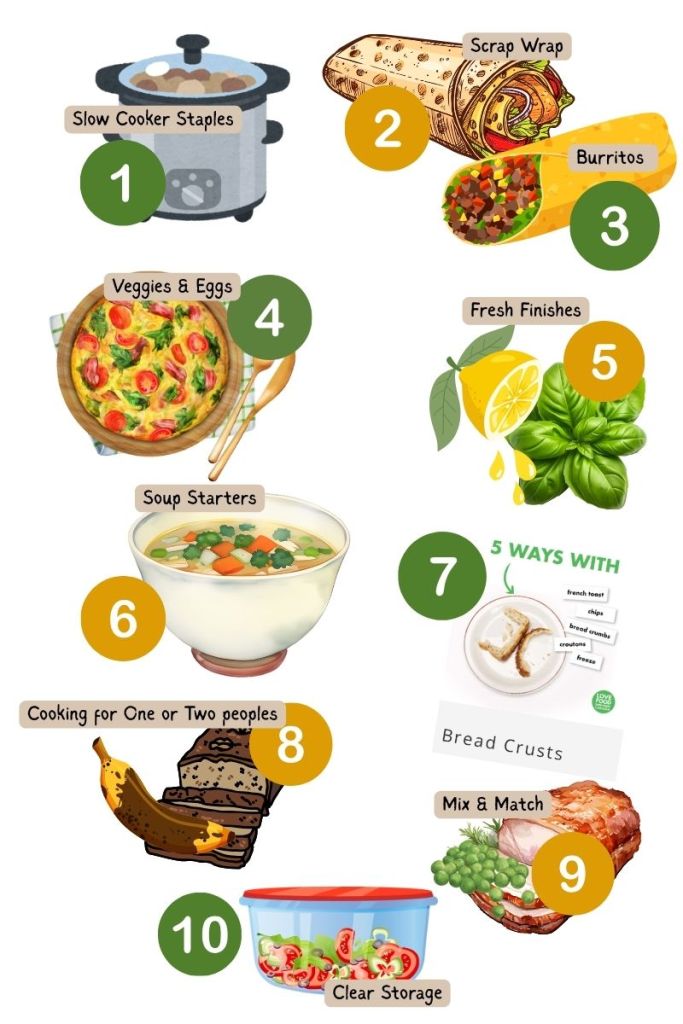
Infographic titled '10 Delicious Ways to Reimagine Your Leftovers' with illustrations and numbered tips.Slow Cooker Staples – A slow cooker with soup inside. Scrap Wrap – A wrap filled with assorted leftover ingredients. Burritos – A burrito with rice, beans, and vegetables. Veggies & Eggs – A frittata or egg dish with vegetables. Fresh Finishes – Lemon, basil, and olive oil for flavor. Soup Starters – A bowl of soup with mixed vegetables. 5 Ways With Bread Crusts – Ideas for using bread crusts like croutons and French toast. Cooking for One or Two – A banana and banana bread. Mix & Match – A protein like roast meat with vegetables. Clear Storage – A clear container with visible leftovers inside.
10 Delicious Ways to Reimagine Your Leftovers – Tips from a Dietitian
  1. Slow Cooker Staples: I still favour my slow cooker to make big batches of soups and mixed meals like chili or curry. Some of it is eaten for a few days and some of it gets frozen for later enjoyment. Labelling and dating is an extra step that is always appreciated when the food is later thawed.  
  2. Scrap Wraps: Making wraps with a bit of meat, hummus or beans, leftover roasted or raw vegetables and your favorite condiment, dressing and/or cheese makes a quick meal.
  3. Burritos: Burritos are a great way to use leftover rice. Add canned beans, salsa and your choice of fresh or frozen vegetables and spices.  I especially like how crispy they get in the air fryer but the oven or frying pan work well too. 
  4. Veggies & Eggs: Leftover vegetables are so quick to use in an egg dish like scrambled eggs or frittata.
  5. Fresh Finishes: A squeeze of lemon juice, a drizzle of olive oil or some fresh herbs can sometimes brighten up leftovers.
  6. Soup Starters: Almost any leftover meat, vegetable or grain can be added to a soup.  Here are a couple of my favourites: Leftovers Soup and How to turn leftovers into soup
  7. More Ideas: So many other great ideas to try: Five ways with commonly wasted foods. 
  8. Cooking for One or Two people? This resource is for you! 
  9. Mix & Match: I’m not afraid to mix leftovers.  A protein from one meal can sometimes be mixed with vegetables from another.  It keeps mealtime interesting.
  10. Clear Storage: Finally, store leftovers safely in see-through containers when possible so they are easier to see.

Share your reimagined leftover tips at #WasteLesswithMLFPC

What a marvelous resource soup is for the thrifty cook –
it solves the ham-bone and lamb-bone problems,
the everlasting Thanksgiving turkey, the extra vegetables.

~ Julia Child


Food Waste Challenge Week 1: Waste Not, Want Not: Mastering Zero Waste Meals

This week, we’re challenging you to create a delicious meal using only what you already have—no extra grocery trips needed! Check your fridge, pantry, and freezer for ingredients that need to be used up and get creative. Whether turning leftovers into something new, making a hearty soup, or whipping up a quick stir-fry, every small step helps reduce food waste.
Need inspiration? Ellen Lakusiak, a former dietitian with the Food Policy Council, shares her experience and easy ways to transform leftovers into tasty meals! ⬇️

Ellen’s Go-To Zero-Waste Meal Ideas:

By:Ellen Lakusiak

I have been there. I have looked in my fridge and don’t know what to do with what’s there to make a meal, especially the leftover foods. None of us feel good about throwing out food we spent money on, or spent time preparing. Plus, the methane gas coming from food in our landfills is a major source of greenhouse gas emissions.

According to the National Zero Waste Council, half of all food produced in Canada is not eaten and $49 billion worth of food is sent to landfill or composted each year. 

Fortunately, there are so many easy ways to use up the food in your fridge and pantry to make a meal.

Here are a few of my favorite ways to deal with leftovers and to prepare a meal.

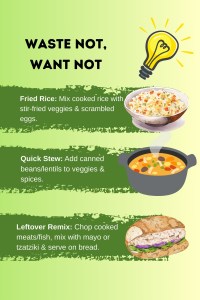
  1. Cooked rice combined with some stir fried veggies and scrambled eggs can be a meal at any time of the day.
  2. Canned lentils or beans can be added to any vegetables (fresh or frozen) with some favorite spices or a dash of hot sauce to make a quick stew.
  3. Dice or chop leftover cooked meats or fish, add some mayo or tzatziki and put it on bread or a bun. 
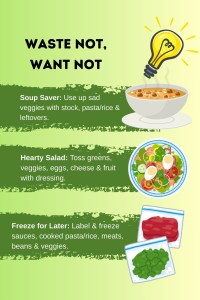
  4. Any sad looking fresh vegetables can be made into a soup; add in some reduced- salt chicken or vegetable stock, some pasta or rice and even leftover cooked meat. Check out this recipe for a minestrone soup https://www.jamieoliver.com/recipes/soup/wholesome-minestrone-soup/
  5. Throw together a hearty salad with greens, chop up other veggies you need to use up, boil a few eggs, grate some cheese and if you have fruit such as apples, pears, mango or pineapple that need using, add them and toss with your favorite dressing.
  6. Make a vegetable stock by boiling up any vegetables you need to use up and freeze it in recipe-sized portions to use for a meal later.
  7. Freeze leftover sauces, cooked pasta or rice, cooked meats, beans, and fresh or cooked vegetables to add to other recipes in future. Be sure to label what they are, how much there is and the date you froze them.

Check out these resources  5 Ways With Commonly Wasted Foods, Creative use of leftovers and recipes for using up food before it goes to waste.

Waste Not, Want Not Resources:

  1. Simple ways to use leftovers https://www.unlockfood.ca/en/Articles/Cooking-And-Food/Recipe-Makeover/Easy-Meals-for-Great-Leftovers-e-book.aspx
  2. Five ways with commonly wasted foods  https://lovefoodhatewaste.ca/5-ways/
  3. Best Before Dates Second Harvest Table https://cdn.prod.website-files.com/6618114bae6895cc12d3dc1d/670ff2ef3f6b93fb01b11f7f_SH-BBD-Consumer-Timetable.pdf
  4. Jamie Oliver Recipes to reduce food waste https://www.jamieoliver.com/inspiration/recipes-to-reduce-food-waste/ 


Part 4 of 4: Our Vision for the Food System

Throughout this series, we’ve explored the journeys of Ginette, Kathy, Ellen, and Susan—how they became dietitians, their connections to food beyond nutrients, and what has shaped their perspectives. Now, in our final installment, we look ahead: What is our vision for the food system?  

As dietitians, we see a future where food is more than just fuel—it’s a cornerstone of health, community, and sustainability. A just and resilient food system ensures that everyone has access to nourishing food, values cultural food traditions, and supports local producers. Here’s how each of us envisions a food system that works for all.


Ellen (former dietitian, retired licence in Dec 2024): “One change I would like to see in our food system is greater support for local production of food so that it is not only available in local stores, but is affordable. Perhaps local producers could be subsidized by provincial and federal governments and/or the food industry. Then perhaps they could have competitive pricing with food coming from elsewhere, which is often cheaper.”


Kathy: “I’d love to see stronger protections for farmland and natural spaces. With the growing need for affordable housing, we should focus on building within existing towns and cities rather than expanding outward and paving over farmland. Thoughtful urban development—like the kind outlined in Five Ways Home—can create housing that supports community, public transportation, accessibility, and sustainability while preserving the land that feeds us.”


Susan: “We should aim to eat for our health which in turn is a local and sustainable diet.  

Ironically, so much of the work we have been doing to promote this very thing, is now being sought with interest secondary to the recent changes in American politics. However, having people’s interest is not enough. Creating meaningful actions is where the real challenge lies, and the hard work begins. The ongoing research conducted through the MLFPC informs us of the needs in our community.  

One change I’d love to see is a growing interest in local food politics, inspired by the recent focus on tariffs. This would include greater support for urban agriculture, smallholder farmers and advocacy for fairly priced local foods.  

By promoting increased use of local protein crops such as legumes and peanuts, we would balance the nutrients and in turn optimize human health. This would also enhance the opportunity for food entrepreneurs to create products with plant proteins. Imagine local peanut butter. The other slightly overlooked local protein source comes from our Great Lakes fish, a resource well known to some and a mystery to others. 

The priority in any changes to our local food system, should be to provide the greatest benefit to individuals whose social determinants of health are most impacted. We will make a difference, one calorie at a time.”


Ginette: “I would love to see food security integrated into our community; where farmland is protected, local farmers and community members are thriving, and food security initiatives are addressed at a community level.  By integrating sustainability into these efforts, we can create a resilient food system that nourishes people while protecting the health of our planet for future generations.”

Read more

Part 1 of 4: Meet the Dietetic Team at the Middlesex London Food Policy Council (MLFPC)

Part 2 of 4: What Inspired You to Become a Dietitian?

Part 3 of 4: Seeing Food Beyond Nutrients

Part 4 of 4: Our Vision for the Food System


Part 3 of 4: Seeing Food Beyond Nutrients

In Part 2, we explored what inspired Ginette, Kathy, Ellen, and Susan to become dietitians and how their backgrounds shaped their connection to the food system. Today, we dive deeper into how their work as dietitians has influenced the way they think about food—beyond just nutrients.

For many, food is more than just a collection of vitamins and minerals. It’s tied to culture, community, environment, and personal experiences. Whether through public health work, gardening, art, or food policy, these dietitians have developed a perspective that extends beyond numbers on a nutrition label. Let’s hear from them on how their careers have shaped a more holistic view of food.


Ginette: “Food is so much more than just nutrition and a tool to achieve personal well-being. Food has cultural, emotional and social significance. Food is what connects us all and allows up to express who we are and what is important to us. In society, food plays a central role in gatherings, celebrations, and traditions.”


Ellen (former dietitian, retired licence in Dec 2024): “I have learned throughout the various phases of my Dietitian career that nutrients matter but food choices matter more. And the food choices people make depend so much on how well our food system works. In order to make the best food choices, one of our main roles as dietitians is to ensure the most up-to-date, evidence-based information is readily available to everyone and explained in easy-to-understand language. There is so much misinformation about food and nutrition.”


Kathy: “My work as a clinical dietitian opened my eyes to the fact that food is so much more than just nutrients—it’s connection, culture, livelihood, and deeply tied to socioeconomic status. I’ve seen how someone can follow every dietary recommendation, but if it means isolating themselves from family and friends, their well-being still suffers. Likewise, knowing what to eat doesn’t always mean having access to it—when food competes with rent or other basic needs, making the “right” choice isn’t so simple. Understanding these realities has shaped how I approach nutrition with compassion and a broader perspective.”


Susan: “My kids: ‘it’s not always about food’

Me: ‘yes, it is’ 

My husband and children think I am obsessed with food, and they are not wrong. 

Household and community food security is well studied, and much attention is devoted to this, but there is a long way to go. Ensuring school children are food secure by having adequate access to food everyday will promote optimal brain development. 

I think it’s important to respect food and its journey to reach us. We should do more to prevent wasting food and the related resources in the food system.  

Working in agriculture and food service is skilled work and should be compensated fairly. Small farms and urban agriculture have the potential to thrive, especially if they are connected to local food processors. Greater value needs to be placed on this work. Rural farmland is not a renewable resource, and it needs to be protected. We can’t underestimate the importance of this. 

There is a lot of misinformation about food and nutrition. I really want people to enjoy meaningful food literacy so they can make informed food choices to benefit their health and the environment. Learning to cook and having awareness of food safety are important life skills.”

Read more

Part 1 of 4: Meet the Dietetic Team at the Middlesex London Food Policy Council (MLFPC)

Part 2 of 4: What Inspired You to Become a Dietitian?

Part 3 of 4: Seeing Food Beyond Nutrients

Part 4 of 4: Our Vision for the Food System


Part 2 of 4: What Inspired You to Become a Dietitian?

In Part 1, you were introduced to Susan, Ginette, Ellen, and Kathy. Today, they share their response to the question: What inspired you to become a dietitian, and how has your background shaped your connection to the food system?

Susan: “Healthcare has always been a big part of my family, so I knew from an early age that I wanted to pursue a career in this field. My connection to food, however, started when I was very young. Growing up near Thunder Bay in the 1970s, family activities like fishing, berry-picking, and gardening, sparked a lifelong love of food. I was curious about food and enjoyed reading cookbooks and watching shows like Julia Child and The Galloping Gourmet. My parents often entertained, hosting dinner parties and going out to restaurants, which further nurtured my passion for food and its cultural significance. 

On my father’s side, my family were farmers in northern Alberta, raising goats for many years. While I didn’t live on the farm, I always felt a deep connection to that rural lifestyle. 

 At first, I didn’t know a profession like dietetics even existed. But once I discovered it, I immediately knew that was right for me and enrolled at Brescia to begin my path to becoming a registered dietitian. It was exciting to be surrounded by people who shared my enthusiasm for food and nutrition. 

 After spending many years working in clinical nutrition in a hospital setting, I became increasingly interested in food systems and procurement with questions like— where does our food come from and why is it so processed. This curiosity led me to join the MLFPC (Middlesex London Food Policy Council), and grateful to now be volunteering with individuals who are actively engaged in shaping the future of our food system.” 


Ginette: “My professional and personal experiences have instilled a strong sense of responsibility and motivation to work towards a more sustainable and connected food system. I deeply value both the land and community relationships.  As a vegetable gardener and a Master Gardner, I have a profound appreciation for the environment and the food I can produce for my family at home as well as support others to grow their own food.”


Ellen (former dietitian, retired licence in Dec 2024):  “I was inspired by another dietitian, to become a dietitian. She was the professor for my Intro to Nutrition class in my 3rd year at the University of Guelph. She was a public health dietitian and spoke with such passion about the work she was doing. Her work was of so much interest to me I switched my career goal of becoming a social worker to becoming a dietitian, and have never looked back. I chose community/public health nutrition as my focus for my entire career as an RD. My most recent role as Coordinator for the MLFPC is where I discovered how instrumental dietitians are in shaping and supporting our local food systems.”


Kathy“When I chose to become a dietitian, I was a bit naïve—I simply thought I’d learn how to “eat healthy.” Growing up on a dairy farm, I hadn’t fully connected the dots between farming, food, and nutrition. As I’ve grown older, my appreciation for my rural roots has deepened. I have fond memories of being surrounded by animals and the rhythm of farm life. My parents had an inclusive approach to food—it was never about strict rules, but rather about enjoying home-cooked meals, often made with milk and meat from our farm. Over the past 19 years, my career has reshaped my understanding of food systems, but those deep roots in rural living continue to shape my perspective.”

Read more

Part 1 of 4: Meet the Dietetic Team at the Middlesex London Food Policy Council (MLFPC)

Part 2 of 4: What Inspired You to Become a Dietitian?

Part 3 of 4: Seeing Food Beyond Nutrients

Part 4 of 4: Our Vision for the Food System

Part 1 of 4: Meet the Dietetic Team at the Middlesex London Food Policy Council (MLFPC)

To celebrate Dietitian’s Day, on March 19, 2025 – we are celebrating the dedicated group of dietetic experts who bring a wealth of knowledge in healthcare, food systems, and community engagement. Here’s a quick introduction to the work of three of our dietitians and one of our former (now retired) dietitians:

Ginette Blake, RD

Ginette is an RD at the Middlesex London Health Unit (MLHU), focusing on reproductive and infant nutrition, food literacy, and food systems. She is passionate about equitable food systems and serves as the MLFPC RD Coordinator, supporting the council’s work for a resilient, sustainable, economically viable, and just food system.

Kathy MacKay, RD, MSc
Kathy is the Food Systems Facilitator at MLFPC, supporting operations, admin duties, and communications. A registered dietitian with experience in healthcare and academia, Kathy is committed to advancing food system change and community health. She’s also pursuing a Graphic Design Certificate from OCAD University. 

Ellen Lakusiak (former dietitian, retired licence in Dec 2024):
As the former RD Coordinator for MLFPC, Ellen’s leadership helped shape the council’s work in fostering a sustainable and equitable food system. Ellen’s leadership and dedication in supporting food systems work earned her recognition as a 2024 Food System Champion. Ellen now supports MLFPC as a volunteer.

Susan Smith, RD
Susan has been an RD since 1997 and is a clinical dietitian at London Health Sciences Centre. She’s dedicated to promoting sustainable food systems and has volunteered with MLFPC for several years, contributing her expertise to food policy work.


Read the rest of the interview with our dietetic team: 

Part 1 of 4: Meet the Dietetic Team at the Middlesex London Food Policy Council (MLFPC)

Part 2 of 4: What Inspired You to Become a Dietitian?

Part 3 of 4: Seeing Food Beyond Nutrients

Part 4 of 4: Our Vision for the Food System

Harvesting Equity: How Type Diabeat-It is Transforming Food Access in London

By: Alyssa Rush,

Communications Volunteer with the Middlesex London Food Policy Council, Alyssa is a PhD student at Queen’s University living in London, Ontario. Her research focuses on agroecology, sustainable agriculture, and local food systems, with a passion for equity, social justice, and community. 

This month at the Middlesex London Public Health Unit (MLFPC), we are highlighting the importance of supporting community food security for equity-denied groups. To showcase the transformative work that Type Diabeat-it is doing in London, we sat down with Mystery Furtado, the founder and driving force behind this remarkable non-profit organization.   

Type Diabeat-it supports low-income, racialized and marginalized communities who live with diabetes. In addition to distributing food boxes throughout the city to those who need them, Type Diabeat-it also runs food literacy programs, as well as the first black-led community garden in London.

The image features a quote about addressing type 2 diabetes through cultural competency and food security, accompanied by a photo of Mystery Furtado. The text reads:  

"On a high level, we're addressing type two diabetes. But we do this, I think, very creatively by addressing food insecurity, talking about food deserts, access to cultural food, and looking at it through a cultural lens ... [we are] really focusing on cultural competency, not only in diabetes management from a clinical perspective but from a community and preventative perspective."*
— Mystery Furtado

The background is a gradient of orange and yellow, and the logo "TypeDiabeatit" is displayed at the top, with "Dia" in red and the rest in blue. Mystery Furtado is pictured on the right, wearing vibrant clothing with bold patterns and unique earrings.

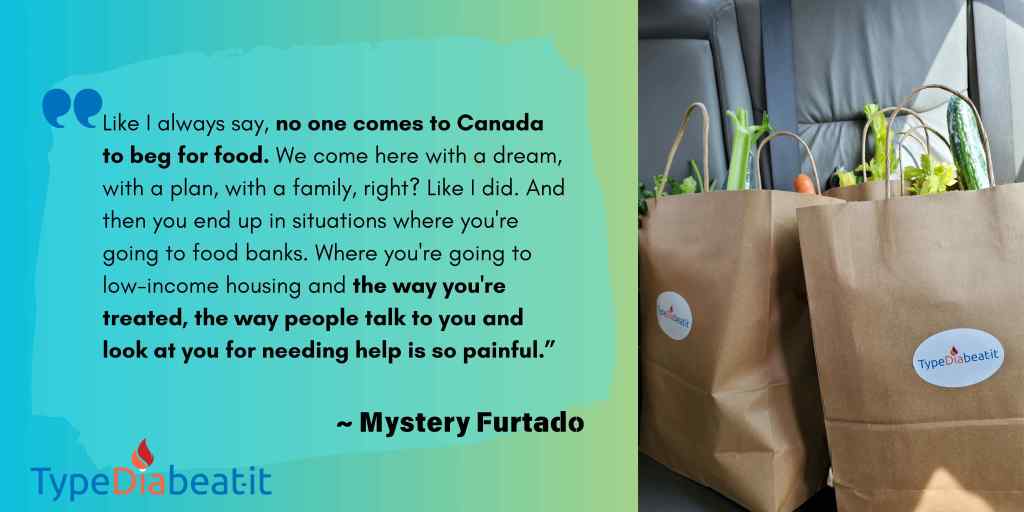
Type Diabeat-it provides food boxes to around 400 families every month within the London area. Driven by a commitment to equity and the knowledge that there needs to be more supports and resources for the BPOC community in London, Mystery knows what it feels like to struggle.

The image features a quote from Mystery Furtado about the challenges immigrants face regarding food insecurity in Canada. The text reads:

"Like I always say, no one comes to Canada to beg for food. We come here with a dream, with a plan, with a family, right? Like I did. And then you end up in situations where you're going to food banks. Where you're going to low-income housing and the way you're treated, the way people talk to you and look at you for needing help is so painful."
— Mystery Furtado

The background is a gradient of blue and green. At the bottom left, the "TypeDiabeatit" logo is displayed, with "Dia" in red and the rest in blue. On the right, there is an image of paper grocery bags filled with fresh vegetables, including celery, cucumbers, and carrots, placed on a car seat. The bags are labeled with the TypeDiabeat-it logo.

This commitment to equity serves as a driving force for Type Diabeat-it. Food boxes distributed by the charity focus heavily on fresh produce. Recognizing that families are facing a lack of fresh produce, these food boxes focus on healthy greens, including Afro greens such as callaloo, okra, swiss chard, and mustard greens. In addition to serving as important sources of nutrients, these vegetables also are directly linked to reducing blood sugars. This commitment to providing fresh fruits and vegetables allows Type Diabeat-it to provide healthy food for families across London, that may not have access to these types of foods due to systemic barriers. 

 The community garden, Harvest Haven, now boasts a bigger greenhouse, solar power, and an in-ground well. Situated on land donated by Cardinal Fine Cabinetry, Harvest Haven is now positioned to grow food to help the community.

The image features a quote from Mystery Furtado about Harvest Haven, emphasizing its purpose as a place of pride, community, and growth. The text reads:  

"So, Harvest Haven is literally in the name. It’s going to be where you can harvest as much food and also have a sense of pride. So, the reason why [we named it]... Haven is peace... we’re so excited for this planting season. We’ve been able to invite classrooms onto the land, which has been so beautiful... Now we have electricity. The greenhouse is warm, our solar panel is up, and we have water that we can pump so the plants can grow."
— Mystery Furtado 

The background is a gradient of green shades with quotation marks at the top left. At the bottom left, the "TypeDiabeatit" logo is displayed, with "Dia" in red and the rest in blue.  

On the right side of the image, there is a photo of vibrant green seedlings growing in dark soil. A hand is gently tending to one of the plants, highlighting the care and attention involved in nurturing growth. The plants have visible water droplets on their leaves, giving a fresh and thriving appearance.


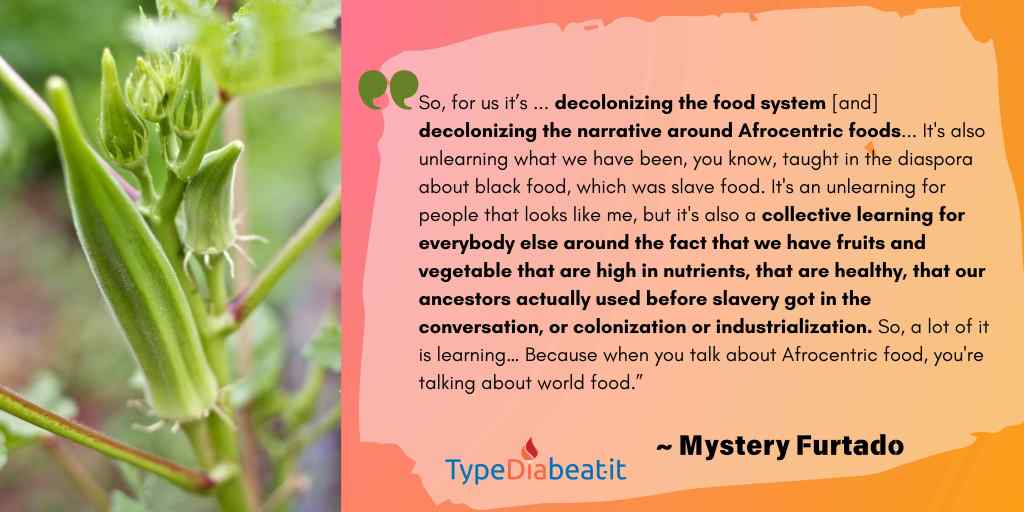
With the garden, Mystery hopes to teach people to have a connection to the land and learn where food comes from. With a strong emphasis on growing cultural and ethnic foods, Type Diabeat-it aims to remove the stigma surrounding certain foods and recognizing them instead as healthy and valuable. Historically, food has travelled all over the world and serves as a universal language to connect people to each other and the land. Beyond looking at health from purely a clinical perspective, Mystery emphasizes the importance of building community through working with the land as well. 

The image features a quote from Mystery Furtado about afrocentric food.  The text reads:

"So, for us it’s, you know, kind of decolonizing the food system, decolonizing the narrative around Afrocentric foods, right?... It's also unlearning what we have been, you know, taught in the diaspora about black food, which was slave food. It's an unlearning for people that looks like me, but it's also a collective learning for everybody else around the fact that we have fruits and vegetable that are high in nutrients, that are healthy, that our ancestors actually used before slavery got in the conversation, or colonization or industrialization. So, a lot of it is learning… Because when you talk about Afrocentric food, you're talking about world food.”
— Mystery Furtado

The background is a gradient of pinks and orange shades with quotation marks at the top left. At the bottom left, the "TypeDiabeatit" logo is displayed, with "Dia" in red and the rest in blue.

On the left side of the image, there is a photo of vibrant green okra.  

Acknowledging that we live in a food system that has prioritized certain types of food over others, Mystery emphasizes that the issue is not whether certain foods are “better” or “worse,” but if these foods are grown in ways that are sustainable. She hopes to serve as an inspiration for others with the important work she is doing with Type Diabeat-it. 

 Another important initiative that this organization is doing is the ten-week Afro-heritage literacy program across some schools within the Thames Valley District School Board. Approaching the Canadian food guide from an ethnic lens, the program discusses grains such as quinoa, couscous, millet, and sorghum. Incorporating a sensory curriculum, students are able to touch the food, ask questions, and taste it. The program runs from grades four up until high school. It creates a safe space for kids, where they are able to eat healthy, plant-based meals and are free to say if they don’t like something. 

For those wanting to get involved with Type Diabeat-it, a primarily volunteer-led organization, there are many opportunities available. Extra hands to pick up food or sort the food boxes are always welcome. If you have the means to donate, Type Diabeat-it is a charity that would greatly appreciate any financial contributions to fund these important initiatives. 

In November, Type Diabeat-It will host their annual health fair in downtown London, at the Covent Garden Market. In order to decentralize health services and access to support services, this event aims to create a relaxed environment in which community members can learn more about programs and services offered by various health programs and medical services in London. 

Despite all of these amazing initiatives, Mystery acknowledges that there is still much work to be done. Emphasizing the importance of having conversations around food access for equity-denied groups, we recognize there is still a lot of important work that needs to be done. Fortunately, groups like Type Diabeat-it can serve as an inspiration for others to get involved in the London area in these important initiatives.   

The Connection Between Food and Mental Health: An Interview with Christina Seely, RD

This January, the Middlesex London Food Policy Council focused on Food and Mental Health. To explore this important connection, we spoke with Christina Seely, a registered dietitian with over 20 years of experience supporting individuals with mental health concerns. In this interview, Christina shares valuable insights on the relationship between food and mental well-being, the challenges faced by those experiencing food insecurity, and how we can foster better support through food and policy.  The following is a transcript of the interview.  

Question 1: Can you tell us a bit about yourself? 

My name is Christina Seely.  I have been a dietitian for 20 years.  I worked at Parkwood Mental Health Care as an inpatient dietitian for 15 years until 2022.  I have been a dietitian at London InterCommunity Health Centre for the past three years, with a focus on diabetes education. I am a co-chair for the Dietitians of Canada Addictions, Mental Health, and Eating Disorders Network.  I have really enjoyed working with clients in both roles.  

Working in mental health care inspired a strong desire to try to help support the well-being of people living with mental health concerns.  Mental health conditions can be quite challenging to live with and try to manage, and people often still face stigma or discrimination.

In the past few decades, evidence on the importance of nutrition for brain health has significantly increased.  I’ve had the opportunity to do presentations for other health professionals.  I have seen many examples of the cyclical relationship between mental health and nutrition.  

Dietitians have a role in promoting the role of nutrition in mental health, not just physical health. Also, there is a role to advocate for systemic issues, such as addressing higher rates of food insecurity in people living with disabilities.   

Question 2: What trends are you seeing regarding food, nutrition, and mental health

Some of the trending topics in mental health and nutrition research are gut-brain health, the role of specific nutritents in brain health such as vitamin D and omega-3, and how nutrition may be able to reduce the risk of some types of mental health conditions such as depression or dementia.  One of my favourite book authors on these topics is Dr. Drew Ramsey who is a psychiatrist with nutrition specialization.  

The biggest trend is the barrier from inflation and rising food costs.  It is proven that the number one determinant of physical health and diet quality is finances.   Of all types of disabilities, people who have serious mental illnesses face the most significant barriers in their ability to obtain and sustain employment.   They are four times as likely to receive social assistance as individuals without a disability.  ODSP rates are about 30% below the Canadian poverty line.  

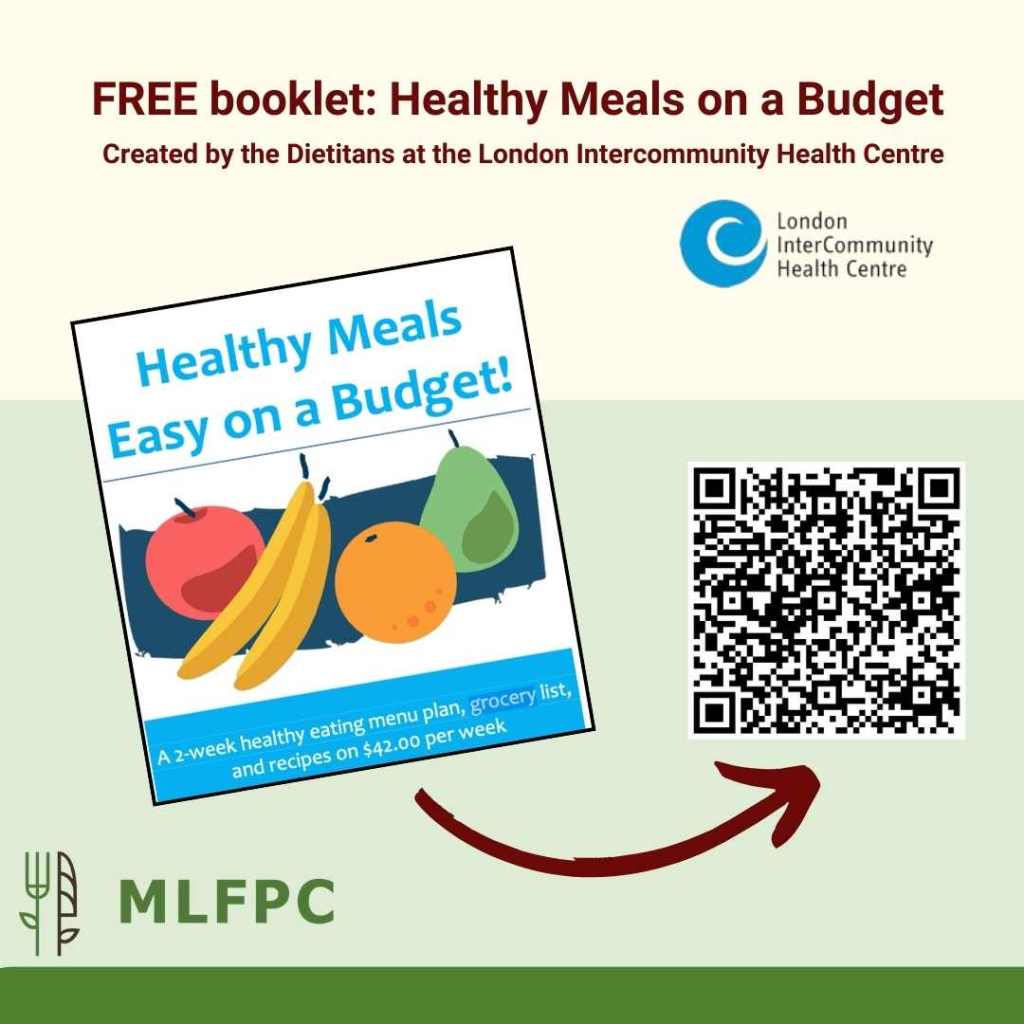
Food bank use is up 90% from 5 years ago, it has never been higher.  As dietitians we are hearing people having to make a lot of difficult decisions with their budget.  A lot of people are shopping at dollar stores, price matching, using apps such as Too Good to Go and FlashFood.  London InterCommunity Health Centre dietitians made a client handout that summarizes these types of options.  

There is an emotional toll of managing food insecurity.  Not knowing if you will have enough to eat can be exhausting.  People can feel resigned to being unable to afford a higher quality diet.

Question 3: What is the role of diet in mental health and brain function? 

There is a cyclical relationship – what we eat supports the function and health of the brain, and mental health symptoms can significantly impact how people eat.  The brain uses 20% of nutrition. The way we eat can impact our mood, focus, and energy level. Nutrition helps the brain manage stress.  

Nutrition affects the brain throughout the life cycle.  This is well known for babies and children, but nutrition also remains an essential component of adult brain health.

Studies show that diet can reduce risk of depression up to 40%, and that one third  of Alzheimer’s diagnoses can be prevented through lifestyle choices.  Medication alone does not adequately control symptoms for all people living with mental illness and diet is one tool in the toolbox.  The MIND diet is one pattern of eating, a collection of foods that help support brain health for function, protection, and repair such as fruit, vegetables, seafood, dark leafy greens, whole grains and nuts. Bright or deeply coloured plant foods are nature’s signal that these foods are healthy for us. That being said, a wide range of eating habits can support health, there is no one size fits all.  

A top recommendation is to eat fish at least twice a week, especially those that are high in omega-3 fats.  The only significant source of the most beneficial type of omega-3 fat DHA is oily fish, such as salmon, mackerel, herring, trout, and sardines.  Omega-3 fats are essential for the brain and can only be obtained through diet.  They build brain cell membranes, reduce inflammation, and promote new brain cell formation.  Countries that have the highest intake of fish have the lowest rates of depression.  Omega-3 fat can improve mood and memory and reduce the occurrence of brain disorders from depression to dementia.  Lower cost options include canned or frozen fish and omega-3 fortified foods such as eggs.

Question 4: How does mental health impact eating well?

Mental illness can also lead to food insecurity through possible symptoms such as lack of energy, low motivation, and impairment in thought processes, concentration and decision-making. Even doing grocery shopping can be difficult without good mental health.

The way we eat is impacted by many factors.  People living with serious mental illness can have symptoms such as lack of energy, low motivation, and impairment in concentration and decision making.  The eating process includes many steps planning meals, grocery shopping, cooking and cleaning and this can feel overwhelming.  They can lead to decreased or increased appetite, skipping meals, or needing to rely on convenience foods due to low energy and motivation

It is common when people are under stress or their mood is low to crave favourite foods, although some people under stress may have a reduced appetite particularly with depression.  Mental health medications can sometimes increase appetite or thirst.  

It is important for people to hear that it is okay to be flexible with eating and to do what you can, when you can.  People can feel a lot of pressure to eat in a certain way, but there are many ways you can eat to support your health.  

Question 5: How can we support mental health through nutrition and food?

People often minimize the impact that skipping meals, eating irregularly, eating out frequently, eating few fresh foods, having a lot of caffeine, eating on the go etc has on their overall health.  Some workplaces seem to encourage people to work through their lunch and breaks.  This can backfire as fueling the body and brain with regular healthy meals with a couple of food groups is one of the most important ways people can support their physical and mental health and enhance productivity.  Even eating breakfast regularly is helpful for mood, concentration, and ability to retain information.  Regular meals provide protein and carbohydrate, both of which are important for the production and use of feel good hormones such as serotonin.  

If people eat ultra-processed foods and higher sugar foods frequently, it can lead to energy crashes and can impact health over time.  

Creating consistent eating routines, even starting with small changes like preparing simple meals in advance, can help individuals struggling with mental health challenges regain some control and balance.  

Accessing community resources like food co-ops, urban gardens, or shared kitchens can provide support while reducing isolation and fostering a sense of community.  

Creating consistent eating routines, even starting with small changes like preparing simple meals in advance, keeping ready made items on hand, can help individuals struggling with mental health, consider ready made options such as Meals on Wheels can be helpful.  Lower costs foods such as frozen produce, eggs, beans, canned fish, brown bread, peanut butter can be helpful.  

Farmers Need Maintenance Too: Perspectives on Mental Health in Agriculture

By: Crispin Colvin (guest blogger)

About Crispin: Crispin Colvin is a Director with the Ontario Federation of Agriculture, representing farmers in the southwestern Ontario counties of Lambton and Middlesex. He and his wife have a small herd of beef cows and grow corn, soybeans and wheat together with their son and his young family.

Farming is much like any career. Where we differ is that, in agriculture, we have many different variables that add stress to our daily lives.  We are business owners and often the sole employee. Family plays an important part in our day to day lives. They too work on the farm, often in a part time capacity. Some farms will have employees, which can add another level of challenge and stress.

Some of the variables, challenges, that we face are weather, health of animals, long days in the fields, pressures of financial management and the need to care and provide for our family. These are just some of the stress factors farmers face. It is important that farm families have support for their well being and mental health. Just as farming can take a physical toll on our bodies, so too can the stress of farming take a toll on our mental health.

Farmers know that in order to have your equipment ready for the season ahead and to keep it in peak condition, requires regular maintenance to perform at its best. Farmers also need to perform regular maintenance on our mental health as well. As the most valuable resource on the farm, we need to have our mental health at the top of the list in order to work safely and be there for our families. With winter comes some down time. This is a good time to check in on yourself and to be sure you will be in top operating performance for the year ahead. Your mental well being is as important, perhaps more so, than your physical well being. Make sure you have time for your chores, but more importantly, make sure you have time for your loved ones. Enjoy some of the slower time this season brings. Recharge your physical and mental batteries for the year ahead. 

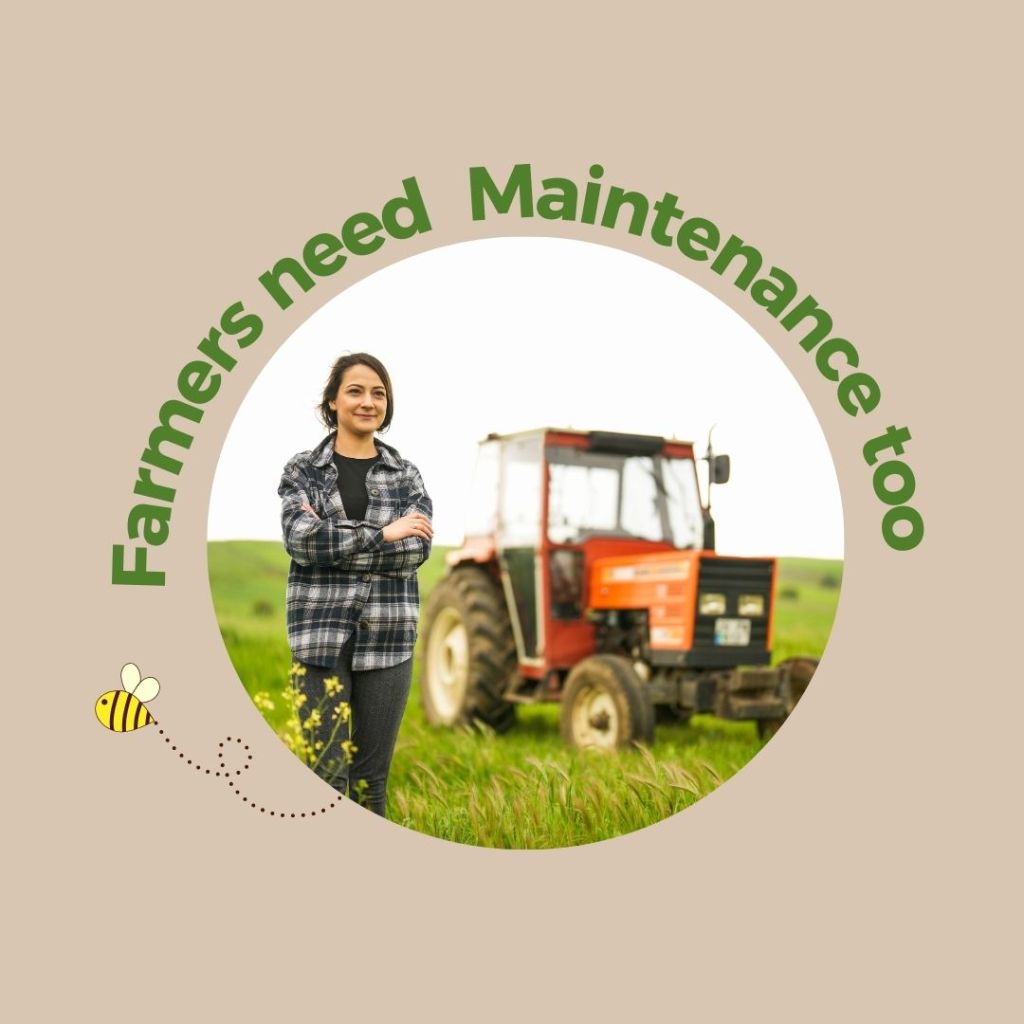
A smiling woman farmer stands confidently in a lush green field with a red tractor in the background. Surrounding the image is the text "Farmers need maintenance too" written in a curved design. A small bee graphic with a dotted flight path adds a playful touch to the image.

As the year progresses, make sure you take breaks. Be sure to eat properly. To function well, machinery needs care. It needs maintenance and fuel. So do you. You need maintenance such as rest and a good sleep. You need fuel, good food. Even a meal taken with family in the field is a good break from staying in equipment and just having a snack. 

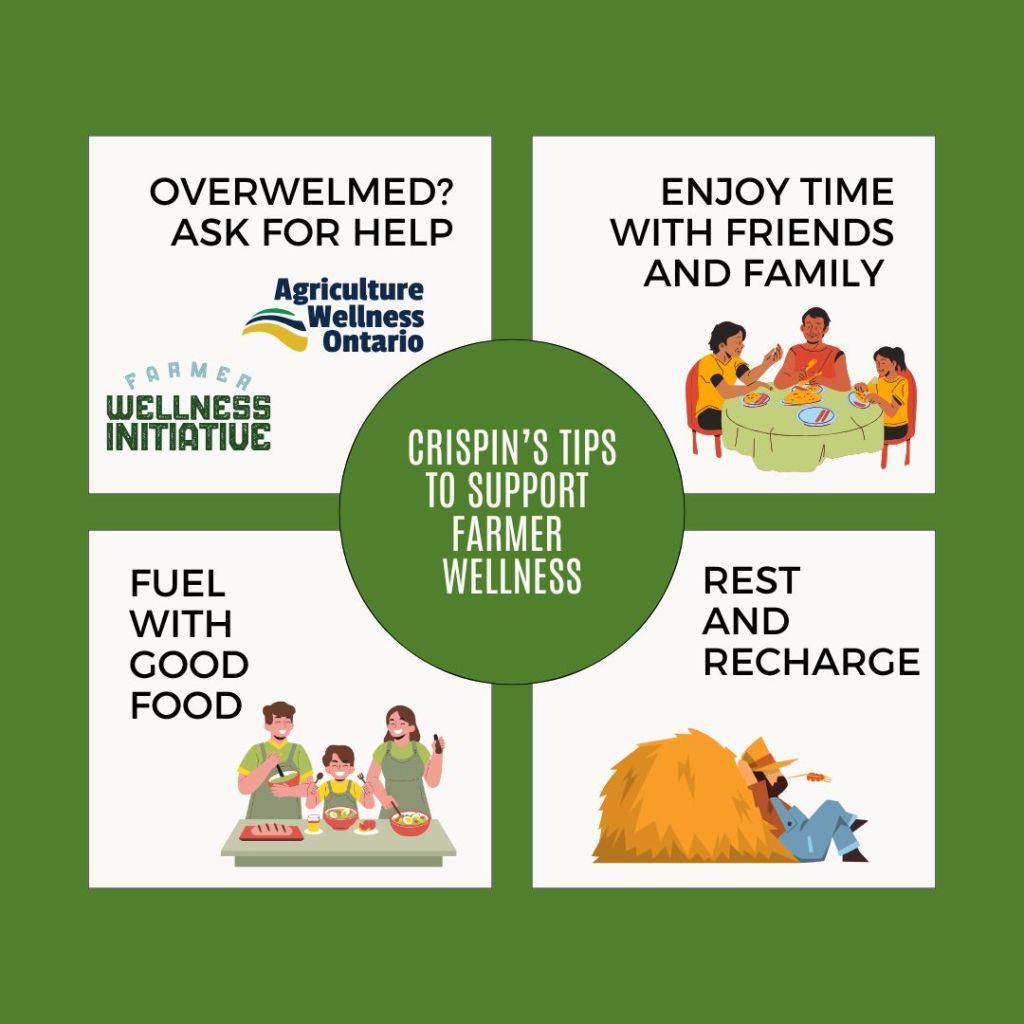
A green background features a graphic divided into four sections around a central circle with the text "Crispin's Tips to Support Farmer Wellness." The top-left section reads "Overwhelmed? Ask for help" with logos for the Farmer Wellness Initiative and Agriculture Wellness Ontario. The top-right section shows an illustration of a family enjoying a meal and reads "Enjoy time with friends and family." The bottom-left section has an illustration of a family cooking and reads "Fuel with good food." The bottom-right section features a farmer resting against a haystack with the text "Rest and recharge."

If you feel overwhelmed, reach out. There are many supports for farmers and their employees. Take care of others if you can. Checking in on neighbours and friends lets people know you care. It is also beneficial for you. We need company and other people to share our stories and our ideas. 

If you, or anyone you know, feels they would like to talk to someone, have them call the FARMER WELLNESS INITIATIVE at 1-866-267-6244. This number is available 24 hours a day in English, French, and Spanish. 

Its okay to not be okay.

Rising Food Prices: Simple Tips to Eat Well on a Budget

By: Juanqi (Irena) Wang

As food prices continue to increase, many Middlesex and London residents struggle to afford nutritional meals. Despite the challenges, there are several ways to stretch your budget and still include healthy food.

Fresh Produce and Essentials on a Budget

One of the most efficient strategies to save money is to focus on inexpensive staples such as eggs and fresh produce. Farmers’ markets frequently offer cheaper rates near the end of the day. For example, at the Western Fair District Market, you may get fresh fruits and vegetables at a discount in the last hour of operation. Grocery stores routinely discount day-old produce, baked goods, and dairy items, which are still safe and nutritious. Even meats are discounted, especially if you shop early in the morning.

An outdoor farmer's market with a variety of fresh produce displayed under a red canopy. Vendors and shoppers interact, with one person pushing a shopping cart filled with vegetables. The scene is set in a charming town square with warm sunlight and buildings in the background.
Source: ChatGPT text to image

Best Before Dates and Discounted Food Apps

Best-before is NOT an expiry date. Understanding the difference between best-before and expiry dates can help reduce food waste. Foods with best-before dates are still safe to eat after that date, although their freshness may deteriorate. Expiry dates are used on very few foods such as infant formula, medications, etc. Apps like Too Good To Go allow you to buy food nearing its best-before date at a discounted price, helping you save money while limiting waste. Many offers, like baked goods, usually come in larger quantities- perfect for freezing and enjoying over time. Make sure to check out what’s available near you, as plenty of different offerings vary by location.

Maximize Savings with Smart Shopping

Consider these additional tips for shopping on a budget:

  • Use shopping apps: like Flipp and Checkout 51 to find weekly deals and earn cashback.
  • Buy in bulk: Staples like rice, beans, and oats are cheaper when purchased in larger quantities.
  • Plan meals around sales: Meal planning based on store flyers can help you save money while reducing food waste. Try using meal-planning templates like this one.

Utilize Community Resources

The London Good Food Box is an excellent method to get fresh, low-cost produce from local suppliers. Community gardens in Middlesex London provide opportunities to cultivate your own food. These efforts contribute to food security, particularly for low-income households. 

An outdoor farmer's market with a variety of fresh produce displayed under a red canopy. Vendors and shoppers interact, with one person pushing a shopping cart filled with vegetables. The scene is set in a charming town square with warm sunlight and buildings in the background.
Source: ChatGPT text to image

Focus on Affordable, Nutrient-Dense Foods

Incorporating more plant-based meals, such as beans, lentils, and seasonal vegetables, can help you eat better while saving money. These nutrient-dense solutions are cost-effective and may reduce the risk of chronic diseases like diabetes and heart disease.

A colorful illustration of an open fridge filled with fresh produce and food items. The fridge shelves display green vegetables, fruits, and prepared meals like lasagna and soup. Outside the fridge are two bowls filled with food, a bottle of orange juice, and some utensils, surrounded by jars and canned goods on nearby shelves.
Source: ChatGPT text to image

Reducing Food Waste

Meal planning and using leftovers correctly can help you save time and money. To extend the life of food, limit portion sizes and freeze any excess. For helpful advice on reducing food waste and getting the most out of your shopping, check out these food waste education resources here

Eating Well on a Budget: Final Thoughts

While rising food costs can feel overwhelming, these small changes can make a difference in helping you eat well on a budget. From finding deals on fresh produce to exploring community resources, there are ways to make nutritious meals more accessible. Remember, every step you take—meal planning, reducing food waste, or supporting local markets—helps stretch your dollar and supports a more sustainable, resilient food system. Have your tips for budget-friendly shopping? Share them with us and help our community thrive together!”

Frisa Farms: A Multi-Generational Commitment to Sustainable Agriculture

Frisa Farms is a shining example of what it means to be a true food system champion. Spanning three generations, this family-owned and operated farm is a labour of love where every family member plays a crucial role in its success.

Their thriving flock of 12,000 chickens, which produce a daily output of approximately 11,000 eggs. These eggs are gathered, sorted, and inspected on-site to ensure that only the best reach their customers.

The well-being of the flock is key to the farm’s success. The chickens are fed a diet of farm-grown feed and receive daily inspections and regular monitoring by a poultry specialist to ensure they thrive and continue producing high-quality eggs. This attention to detail and care is what allows only the best eggs to reach their customers.

Sustainability is at the core of their farming practices. The land is treated with the utmost respect, ensuring that it remains productive for generations to come. This commitment to sustainable agriculture is evident in every aspect of their operation, from the way they care for their animals to how they manage their crops.

One of the most remarkable aspects of Frisa Farms is their sense of unity and collaboration. It’s a joy to witness family members working together, each contributing their unique skills and knowledge to the farm’s success. This family bond, coupled with their shared passion for farming, is what makes Frisa Farms a pillar of our local food system.

https://www.facebook.com/FrisaFarms/ 

Ironwood Kitchen and Bar: Making a Difference in the Local Restaurant Scene

Ironwood Kitchen and Bar Plate of FoodWritten by Eunice Yidana

Ironwood Kitchen and Bar is a contemporary and vibrant restaurant that started in 2022 in London, Ontario, to infuse local roots and global inspiration into their cuisine. The restaurant has various menu options such as brunch, lunch and dinner, kids, dessert, drinks, happy hour, featured menu, and dinner series which cater to everyone and at different times of the day. They also have gluten-free, vegetarian and vegan options.

The restaurant’s menu is crafted by its Culinary Director, Chef Nicholas Valin and his talented culinary team. A distinct quote can be found on their menu which reads: “Our menu draws inspiration from the rich Canadian cultural mosaic, the bounty of Southwestern Ontario, and the vibrant community that surrounds us”- Chef Nicholas Valin.

Ironwood Kitchen and Bar collaborates with St. Joseph’s Hospice of London by donating $1 to every Ironwood Burger sold. This initiative fosters their corporate social responsibility to the community and propels their sustainability practice.

The restaurant provides an intimate atmosphere for their guests and a live music experience with a schedule of performers on their website.

Ironwood Kitchen and Bar is well known for creating delicious food grounded in precision and passion by their chefs to create masterpiece dishes.

Learn more at:

https://ironwoodkitchenandbar.com/

Instagram: ironwoodkitchenandbar

Facebook: Ironwood Kitchen and Bar

LinkedIn: Ironwood Kitchen & Bar

Friendly Fare Specialty Food Services: Empowering Entrepreneurs Through Shared Culinary Spaces

Friendly Fare Specialty Food Services, led by Jay Caldwell, has been at the forefront of this effort for over 11 years, providing a vital resource for aspiring entrepreneurs in London, including many newcomers to Canada. By offering low-cost, licensed, and inspected commercial rental kitchen facilities, Friendly Fare enables individuals to enter the culinary space with minimal financial barriers while ensuring safe food production practices.
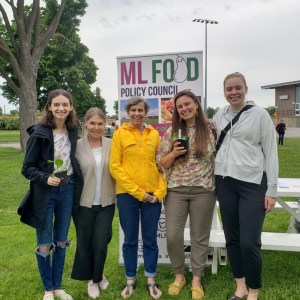
Jay’s dedication to the community goes beyond just providing kitchen space. He and his team offer free culinary consultations and business start-up advice to all renters, helping them navigate the complexities of launching their food production services. Jay takes immense satisfaction in knowing that he is providing a much-needed service without taking a salary, demonstrating his commitment to fostering entrepreneurship and reducing costs for consumers. The shared kitchen facilities include essential resources like refrigerated storage, dish pits, and cleaning supplies, ensuring that all renters have access to the tools they need to succeed. Each renter is required to have a current Food Handlers’ Certificate and sign a Kitchen Rental Agreement, promoting best practices in food safety and business management.

Friendly Fare is more than just a commercial kitchen; it is a supportive community where individuals can learn, grow, and thrive. By creating a low-barrier environment for food production, Jay and his team are not only helping small entrepreneurs achieve their dreams but also contributing to a more sustainable and inclusive food system.

Connect with them on their facebook page at: https://www.facebook.com/friendlyfare/

Ellen Lakusiak: A Champion for Middlesex-London’s Food System

  Ellen Lakusiak (pictured in yellow) is a Registered Dietitian (RD) with the Middlesex London Public Health Unit and serves as Coordinator for the Middlesex-London Food Policy Council (MLFPC). With a wealth of experience in public health and a passion for food systems, Ellen has helped in shaping and promoting the vision of a sustainable and healthier local food system in the Middlesex London area.
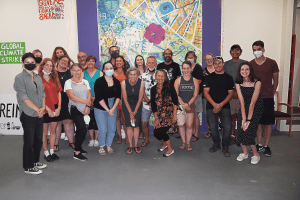
Ellen’s role as Coordinator at MLFPC has been to facilitate collaboration and dialogue among members and action groups, acting as a consistent point of contact. Her leadership and dedication have been key in establishing the MLFPC as an important part of the community. Her commitment to ensuring that all voices are heard has been a cornerstone of her work, helping to bring the council’s vision to life through sustainable funding, community engagement, and collaboration. 
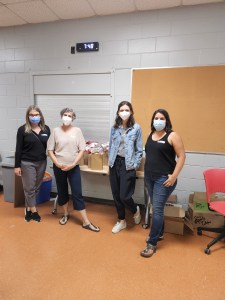
Ellen also credits the many passionate volunteers she has worked with over the years for making this work possible and rewarding. Her dedication, humility, and leadership have made her a true champion for the local food system in Middlesex-London.

Learn more about the Middlesex-London Food Policy Council at http://www.mlfpc.ca

The Lunchbox London: Filling Lunch Boxes and Fueling Futures


The Lunchbox London is a registered not-for-profit organization run by Colin and Alexandra Everitt dedicated to providing food assistance to school-aged children in food insecure families throughout London, Ontario. Their mission is to address food insecurity while reducing food waste, ensuring that every child has the opportunity to grow, learn, and thrive.

The Lunchbox London with NDP partyThe mission of The Lunchbox London is twofold: to combat food insecurity among school-aged children and to reduce food waste by rescuing food that would otherwise go to landfills. By distributing donated and rescued food, they support the nutritional needs of struggling families and contribute to environmental sustainability.

Proper nutrition is crucial for children’s overall growth and development, affecting their academic performance and social well-being. By tackling food insecurity, The Lunchbox London creates an environment where every child can reach their full potential. Since their inception in April 2023, they have provided over 800 food bundles to families, amounting to approximately 12,000 pounds of food.

The Lunchbox London bags of food in trunkThe Lunchbox London started as a grassroots initiative in April 2023, aiming to provide healthy lunch foods to food insecure families. In November 2023, they became a registered not-for-profit, offering opportunities for sponsorships, grants, and support from local businesses. Recognized for their contributions, The Lunchbox London has been nominated as a Food System Champion.

To Learn More: 

Website: www.thelunchboxlondon.com 

Facebook

Instagram

Katherine Hogendoorn: A Visionary in School Nutrition and Food Literacy

Katherine Hogendoorn with Food Champ BasketKatherine is a dedicated Community Development Coordinator with the Ontario Student Nutrition Program (OSNP) in London-Middlesex. With a deep passion for nutrition and education, Katherine has spearheaded an innovative program that introduces culturally diverse foods and food literacy to students. Through her collaboration with Growing Chefs and the Thames Valley and London District Catholic School Boards, Katherine has developed a program that provides a monthly cultural food item to schools. These foods, paired with educational resources, coincide with cultural celebrations, allowing schools to teach students about the significance of these events and introduce them to new and diverse foods.
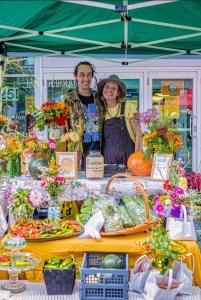
This initiative has been so successful that it is now being considered for regional integration across Southwestern Ontario within OSNP resources. Katherine’s visionary approach has not only expanded the reach of OSNP London but has also strengthened the connection between schools, parents, and the broader community. Her work continues to raise awareness about the importance of school food programs and the role they play in nurturing well-rounded, culturally aware students.

Learn more:

https://osnp.ca/


The Schoonders Plot: Cultivating Community and Addressing Food Insecurity through Gardening

Carissa and Sam, The Schoonders Plot

Written by Eunice Yidana

The Schoonders Plot is run by Carissa and Sam, a couple that is passionate about gardening on their perennial plot. Family and friends are a building block as they let them use their fields as a garden, and support in maintaining the garden to meaningfully contribute to their operational success.

The Schoonders Plot aims to eradicate food insecurity. They grow a variety of amazing produce that they share with their friends struggling with food insecurity, but ‘sell’ in exchange for donations. They partner with organizations and businesses to sell produce to donate proceeds to support worthy causes in the community, especially their unhoused neighbours.

Carissa and Sam host seedling sales every spring with a variety of plants with the sole purpose of replicating their donation style to the seedling sales. With the seedling sales, they encourage people to grow their foods in their home/community, so they can feel empowered to feed themselves.

Learn more at:

Instagram: the.schoonders.plot

Facebook: The Schoonders Plot


Type Diabeat-it: Empowering BPOC Communities Through Food

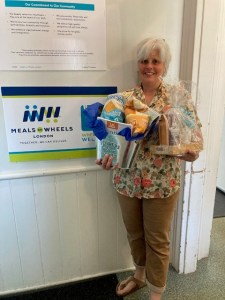
Mystery Furtado from Type Diabeat-itType Diabeat-it is a charitable organization dedicated to supporting BPOC communities living with or at risk of Type 2 Diabetes. Founded by Mystery Furtado, the organization addresses the behavioural risk factor of unhealthy eating by planting, harvesting, and processing Afrocentric vegetables. These vegetables are then redistributed to the community, helping to reduce food insecurity and promote the preparation of affordable, culturally relevant, diabetes-friendly meals.

Through culturally conscious events and fundraisers, Type Diabeat-it aims to combat diabetes with effective education and preventative measures. Their work strives to reshape the narrative around health care, making it more inclusive and supportive.

Type Diabeat it LogoType Diabeat-it believes in empowerment through food—seeing it as a tool, resource, and equity. By equipping Canadians and minority groups with the resources to manage and prevent diabetes, they are making a significant impact on community health.
Learn more:

Website: http://www.diabeat-it.ca

Facebook

Instagram  

Meals on Wheels London: Building Independence and Nourishing Wellness

Meals on Wheels with gift basketMeals on Wheels London (MOWL) is a Home and Community Care provider through an agreement with Ontario Health. Since 1969, they have been delivering fresh and frozen meals to seniors and adults with disabilities. Their commitment extends beyond meal delivery to include transportation services, facilitating access to wellness-related appointments. MOWL plays a pivotal role in ensuring food security and providing deeply affordable and reliable nutrition, especially for vulnerable populations such as seniors, adults living with disabilities, and those with low incomes or experiencing crisis situations.

Their Services

MOWL offers hot and frozen meal delivery and a door-to-door transportation service, helping seniors and adults with disabilities access nutritious meals and essential appointments. They partner with Youth Opportunities Unlimited’s ‘You Made It Cafe’ to provide fresh daily meals, supporting youth with employment and culinary skills while ensuring deeply affordable meals for London’s seniors and disabled adults. This non-profit partnership promotes a sustainable and reliable source of food security for Londoners.

Their Impact

MOWL’s impact is widespread, with many Londoners testifying that without MOWL, they would struggle to obtain regular meals. Their services contribute significantly to the health and well-being of the community. Additionally, MOWL fosters critical social connection and community engagement through their meal delivery service, addressing social isolation and promoting a sense of belonging.

Join Them

Support Meals on Wheels London in their mission to nourish community wellness and address food insecurity. Your involvement helps make a meaningful difference in the lives of those they serve.

Learn More

Website: https://mowl.ca

Email: info@mealsonwheelslondon.com 

Facebook: https://www.facebook.com/MealsOnWheelsLondon

Instagram: https://www.instagram.com/mowlondon/#